Author: admin

  • Best Priced, Inexpensive AC Units on the Market

    If you’re a homeowner or a commercial building owner looking to replace an AC unit, at Howard Air & Plumbing we understand that value is at the top of your list of concerns. You’re not alone! Generally, our customers tell us that saving money is one of the most important factors when choosing a new air conditioner, and they ask lots of questions about which variables are worth a little flexibility in order to stay within budget.

    Spending less money doesn’t have to mean compromising on quality. You can outfit your home or commercial property with an excellent air conditioner, even if that unit comes from an economy line of products.

    Tips On Buying an Inexpensive Air Conditioning Unit

    Here are a few tips to help you pick through the options as you select an inexpensive, quality air conditioning unit for your home.

    1. About half of your home or business’s energy consumption comes from heating and cooling (primarily cooling in the Southwest). We like to talk to our customers about using Energy Star-rated systems, because they will cost less in the long run. Remember, the cost of cooling your home over time is part of that budget, too!
    2. The efficiency of your AC unit is measured in SEERs. A higher SEER means a more efficient unit, and more savings in utility costs.
    3. Rebates are one way that most major manufacturers keep prices competitive, so talk to us about what’s available at the time of your purchase. Sometimes, those rebates are large enough to make the difference if you’re on the fence between two different models.

    5 Cheapest Priced, Yet Reliable Air Conditioners

    We’ve developed a list of cheaply priced air conditioner brands and units that we believe provide the most bang for your buck, based not only on price but on features and on our personal experiences in installing, repairing, and maintaining these exact units.

    1. Carrier Comfort Series

    Howard Air - Cheap AC Unit for Sale (Carrier)

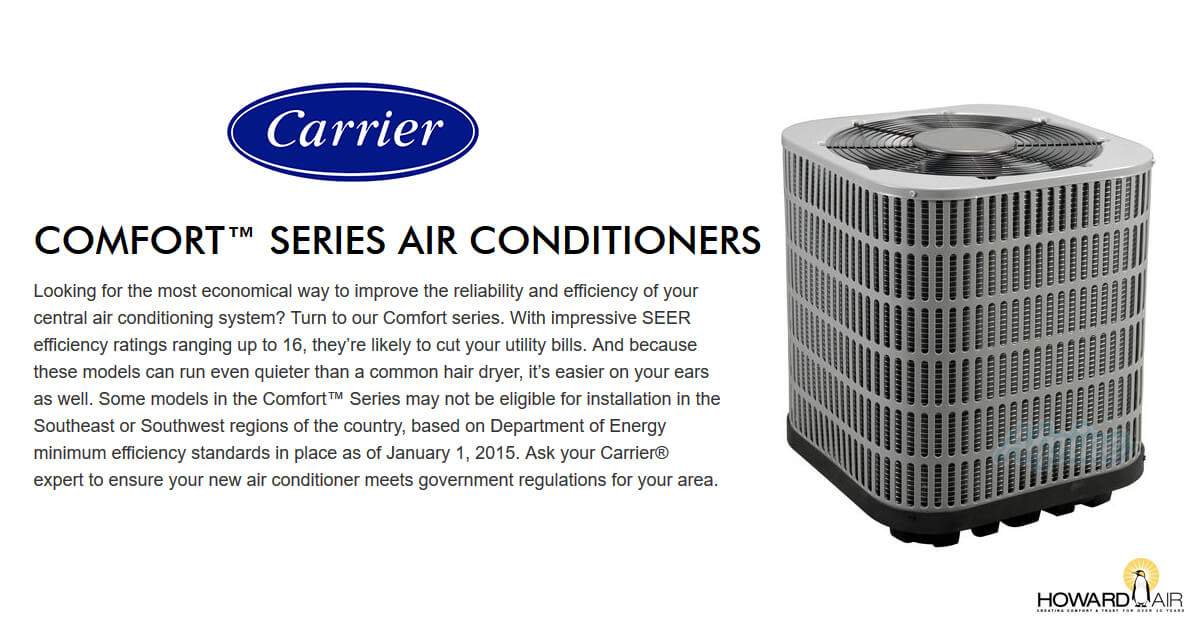
    With SEER2 ratings ranging as high as 16 and sound as low as 72 decibels, it’s easy to see why the Carrier Comfort Series is at the top of its game. Plus, several models in the line are Energy Star-rated, and our experience as a certified Carrier installer means we proudly stand behind this brand.

    2. Trane XR13

    Trane’s economy line of air conditioner units brings energy efficiency at a lower price point. A SEER2 rating of 14.5 and a 10-year limited warranty are major selling points, and we like the optional advanced air filtration for customers with allergies, or for those who just want to cut down on household dust and pollen. We are also certified installers for this manufacturer.

    3. Rheem Classic Series

    Rheem has some terrific, industry-leading technologies that our customers seem to love – from composite base pans and exceptionally quiet mufflers to nice looking units, which is a must if you’re worried about curb appeal or want to be sure that your outdoor unit blends seamlessly into the architecture of your property.

    4. Ruud Achiever Series

    We like working on Ruud units because they’re designed to allow for easier service. That said, it’s ironic how little service they need! 13-15.5 SEER2, quiet operation, and a small footprint are popular features for this line. See more inexpensive Ruud ACs here.

    5. Lennox Merit Series

    The Merit series, like so many other economy AC series, is a compromise on price, not quality! Five-year limited warranties are automatic, but talk to us about an extended 10-year warranty for a full decade of peace of mind.

    For Over 30 Years Howard Air & Plumbing Has Been Installing New AC Units in Phoenix

    At Howard Air & Plumbing, we are ready to use our 30-plus years of experience to help you choose the right AC unit for your needs at the right price. Talk to us about additional recommendations based on factors like the size of your home, number of windows, and your family’s personal preferences. We’re here to help! Click here to contact us or call (623) 201-5153 today.

  • Why is My Air Conditioner Frozen? It’s 100+ Degrees Outside!

    Why is My Air Conditioner Frozen? It’s 100+ Degrees Outside!

    An interesting thing about Arizona HVAC is the weird connection between high daytime temperatures and frozen air conditioners. If you find your air conditioner frozen, you will notice the outside AC line frozen but little or no cool air in your home. It is a frustrating problem, but one Phoenix HVAC contractors see every day.

    Do this first: Switch your cooling system to fan or “on” and let the system run on this setting until the ice melts and the system unfreezes. Please note that this is not a permanent solution; it will prevent further damage being caused to your HVAC unit.

    An Air Conditioner Freezing During Summer is Common in Phoenix

    Arizona is famous for its hot days, and few people realize that this can lead to an AC unit freezing up in summer. How is that possible?

    A common cause of a frozen air conditioner in Arizona is a blocked air filter, which restricts the airflow needed to keep condensation off the coils. Another common cause of is refrigerant leaks. As refrigerant leaks, it can condense on the coils or pool within the unit and freeze as the temperature drops.

    When an air conditioner is frozen, we recommend taking the following steps to fix the problem and get the cold air circulating again.

    A central air conditioner is a marvel of technology that taps the power of science. Refrigerant in your AC lines in intentionally compressed (by a compressor) and then allowed to expand.

    Liquid refrigerant confined under pressure, then allowed to expand under low pressure in an evaporator, cools. This is the Joule-Thomson Effect; it allows your central air conditioner to chill your Phoenix home’s air efficiently and repeatedly with the same refrigerant.

    The laws of thermodynamics mean the cooling refrigerant cools your home’s air by absorbing heat from that air. The warmed refrigerant is pumped outside, where the heat is released, and the cycle continues.

    Frozen Coils

    Seeing frozen coils on air conditioner parts, either inside or outside your home, is a little unsettling in summer, especially in the desert. The indoor evaporator coils could freeze up if too little home air is blowing across them.

    Other causes for frozen coils on air conditioner components:

    1. Too little refrigerant, which implies a dangerous leak in a line; this requires professional servicing quickly.
    2. Running the AC when outdoor temperatures (at night, for example) are low.
    3. Blower fan problems.
    4. Kinked refrigerant line preventing smooth flow of the liquid.
    5. Clogged air filters that impede air flow.

    How to Fix a Frozen AC Unit’s Coils

    When an air conditioner is frozen, start by flipping the breaker and keeping it off until the condenser unit is thawed. This doesn’t take long in the summer.

    Once the ice on AC coils has melted, it is important to dry the coils and remove any moisture that has pooled around the unit. This helps improve efficiency and can reduce the likelihood that the unit will ice up again when it is turned back on. As you are doing this, remove any debris such as dirt, sand or leaves that may be blocking drainage channels.

    Because one cause of frozen coils in an air conditioner could be a refrigerant leak, you should contact your HVAC contractor for a service call. The trained technician will diagnose the cause of the freezing and then repair air conditioner parts as needed.

    Refrigerant cannot legally be released into the atmosphere because of its role in harming our environment. A trained technician can find and fix any leak, and then provide the right amount of refrigerant. This is usually between two and four pounds per ton of cooling, which translates to six to 12 pounds for a typical Phoenix area home.

    Before Switching Back

    Before switching the air conditioner back on, set your thermostat so that you only turn the blower or fan on. This circulates air through the system and can help remove any remaining ice crystals within the coils. Another option is to use a hair dryer on low-heat to blow hot air along the outside of the coils. While it can be tempting to speed up the process and use a high-heat setting, this is something that should be avoided because it can crack the condenser coils and lead to costly repairs.

    Once you are confident that the ice has thawed, turn the unit back on and feel for the cold air blowing through the registers. If it is cool, then you know you have removed the ice and any blockages. If it is not, turn the unit off and go through the steps again.

    Contact Howard Air & Plumbing for All Your A/C Issues

    For frozen line on outside AC unit and all your air conditioning needs, please contact us today. We will be happy to inspect and diagnose your entire system. Ask about preventative maintenace too.

  • Trane vs. Carrier Air Conditioning Unit Comparison

    Trane vs. Carrier Air Conditioning Unit Comparison

    (Updated July 2022)

    What You’ll Learn

    As you read this air conditioner brand comparison, you’ll learn:

    Carrier Vs. Trane Air Conditioner

    “What is the best air conditioning brand?” It’s a question we get all the time, and the answer depends somewhat on your unique circumstances. There are numerous factors that should impact your decision when you buy a new A/C unit:

    The Size of Your Home 

    Larger buildings contain more air that needs to be cooled. Every air conditioner brand makes different sizes of units to accommodate different buildings, but some have better reputations than others when it comes to handling big jobs

    Your Energy Efficiency Goals 

    When you learn about energy efficiency ratings like SEER2, it’s relatively easy to tell which units are the most efficient. What some people don’t think about is how their units will age. For example, the average unit that’s ten years old might be using about 20% to 40% more than a new unit. 

    Increases in air conditioning technology explain this difference, but there’s also some loss of efficiency if the unit isn’t durable enough to hold its quality for a long time.

    The Climate  

    Tough climates require dependable air conditioners. If you live here in Phoenix or any of the surrounding areas in the valley, you know how vital your A/C can be during those hot summer months. You need something durable enough to stand up to all of the dust in the air while still fighting off the brutal heat.

    For all of those reasons, we recommend Trane air conditioners for our clients.

    Why Choose Trane Instead of Carrier

    There are many reasons we usually recommend Trane over Carrier, and there are almost too many to list. Perhaps the biggest reason of all is that Trane makes the best compressors in the business. An air conditioning unit, especially a modern one with lots of innovative technology, relies on many different components to function correctly. Still, the compressor is the heart of the air conditioning unit.

    You’ve probably heard the slogan “It’s hard to stop a Trane.” Well, they’re mostly talking about their compressors. Trane compressors, and therefore Trane units, on the whole, are less likely to fail than most other brands on the market. That’s why Train gets a perfect five out of five for both owner satisfaction and predicted reliability from Consumer Reports.

    To be fair, Carrier also gets a perfect five out of five for owner satisfaction from Consumer Reports. But, of course, some occasional problems skew air conditioner reviews (which we’ll touch on shortly). Where Carrier falls short is in the area of predicted reliability. It still earns a rating of four out of five from Consumer Reports, but the slight dip in reliability will feel like a big deal when the temperature in your house is climbing toward three digits.

    Trane Air Conditioner Reviews Vs. Carrier Air Conditioner Reviews

    Most review sites indicate that Trane and Carrier are highly competitive because both are reputable brands, but we also always caution people to be mindful of where they’re reading reviews. Depending on where you look for reviews, you might notice that they’re either overwhelmingly high or overwhelmingly low. There are reasons for each:

    • For example, some sites collect reviews from people immediately after having their new air conditioners installed. If you just got a new unit last week, you probably haven’t had time to have any problems with it yet. So when you see a site where all of the ratings are positive, this is perhaps what’s happening.
    • On the other hand, you might see some sites where almost all of the reviews are negative. These are sites that don’t prompt people for reviews, and most of us don’t randomly decide, “today is a great day to review my air conditioner.” This is because people are only going to these sites to review air conditioners when they have problems. People are frustrated, sitting in a hot house, and decide to get online and give the manufacturer or their A/C unit a piece of their mind.

    Sites like Consumer Reports are often much better sources of information for things like these. Consumer Reports has become a leader in the review industry because they have a knack for collecting and analyzing many objective data. Their ratings are based on actual failure rates and similar data points instead of review-gathering campaigns organized by marketers. When you get right down to it, owners of Trane and Carrier units seem satisfied by both brands, but Trane does have a little bit of an edge.

    How to Choose an HVAC Contractor

    Here’s something a lot of companies won’t tell you when you’re comparing air conditioning brands: many failures are caused by the company that installed it. Of course, it’s always essential to start with a reliable unit, but it’s every bit as important to get it installed by a skilled technician. It doesn’t matter what kind of air conditioner you buy if the contractor uses the incorrect wiring, messes up the weather sealing, or fails to get the right pressure balance for the refrigerant.

    Here at Howard Air & Plumbing, this is a big part of the reason we specialize in working with Trane equipment. It allows us to be experts when it comes to every single one of the units we install. Our technicians are the best in the business, and they constantly work with Trane equipment. In addition, since we’re installing the same premium air conditioners day after day, we’re intimately familiar with the processes and best practices recommended by the manufacturer.

    Since we have such a strong relationship with the Trane brand, we can help connect our customers with the best possible prices on both the initial installations and ongoing maintenance. When you consider our fair prices and our mastery of our craft, you’ll understand why we win so many awards and get such positive reviews.

    When you learn about energy efficiency ratings like SEER2, it’s relatively easy to tell which units are the most efficient. What some people don’t think about is how their units will age. For example, the average unit that’s ten years old might be using about 20% to 40% more than a new unit.

    Increases in air conditioning technology explain this difference, but there’s also some loss of efficiency if the unit isn’t durable enough to hold its quality for a long time.

    Air Conditioner Service in Phoenix

    Here at Howard Air & Plumbing, we’ve been serving Arizona residents since 1977. In that time, we’ve become so confident in our skills and Trane equipment that we can offer a No Breakdown Guarantee. So contact us or schedule your appointment today!


    Featured Image: Andrey_Popov/Shutterstock

    Main Contact Form

    "*" indicates required fields

    This field is for validation purposes and should be left unchanged.

  • The Average Cost to Replace Heating And Air Conditioning Systems

    The Average Cost to Replace Heating And Air Conditioning Systems


    There are many factors that can affect the cost, and it’s important to know how to estimate them so you know what to expect.

    It’s normal to have a few questions when you start noticing problems with your heat or air conditioning in your Arizona home. How do I know what’s wrong with my system? What do I have to do to get it working again? How much will all of this cost me?

    Most people find it difficult to estimate how much a home or business will cost to replace the heating and air conditioning. Many variables can change the final price. Howard Air & Plumbing will help give you a better idea of what to expect.

    How Much Does it Cost to Replace a Heating and Air Conditioning System?

    The average cost to replace an HVAC system in the United States ranges from $5,000 to $9,000. This assumes the home already has all of the required ductwork. You’ll be looking at additional costs if you need to have ductwork installed. The average price for a new HVAC unit plus ductwork can be anywhere from $7,000 to $13,000.

    A complete HVAC unit includes several vital components. Some general examples include the outdoor unit, indoor unit, refrigeration lines, thermostat, and ductwork. If you don’t have to replace everything, your cost might be slightly lower than it would be for a complete replacement.

    Average Cost to Replace HVAC System

    There are many types of air conditioners, and each type is associated with a different price point. Central air conditioners are extremely common, especially here in the Phoenix area. Still, it’s worth covering all of the following:

    • The average cost to replace central AC is $2,000 to $7,000.
    • The average cost to replace window AC units is $150 to $1,000.
    • The average cost to replace portable AC is $500 to $1,500.
    • The average cost to replace heat pumps is $2,000 to $8,000.
    • The average cost to replace ductless AC (also known as mini-split AC) is $2,000 to $15,000.

    Some of these ranges are larger than others because the cost of the equipment can vary dramatically based on some of the variable factors discussed below. If you also need to install ductwork, you might need to budget another $2,000 to $3,000 on top of the above-mentioned costs.

    Average Cost to Replace Furnace

    Replacing a furnace isn’t usually quite as much of an emergency as replacing the A/C here in the Phoenix area. Still, there are several days each year when temperatures drop low enough that you’ll probably want to have reliable heating in your home or business. The cost of replacing a furnace can vary depending on the type. Here are the average prices for the four most common types of heaters:

    • The average cost to replace a gas furnace is $2,000 to $4,500.
    • The average cost to replace an electric furnace is $1,500 to $2,500.
    • The average cost to replace an oil furnace is $4,000 to $7,000.
    • The average cost to replace a radiator is $2,000 to $4,000.

    Again, you might want to budget for an additional $2,000 to $3,000 if you’re going to need new ductwork as well.

    Factors That Affect Your Average Cost to Replace Heating and Air Conditioning

    If you looking for an exact estimate of how much it might cost to replace heating and air conditioning in your home, or maybe you’re disappointed by these wide ranges. These averages are inexact because a great deal of customization goes into finding your perfect HVAC system. Once you understand the following factors, you’ll be able to budget more precisely:

    • Required Capacity – It doesn’t take as much power to heat and cool a 1,000-square-foot home as a building several times the size.
    • Efficiency – A/C units with higher SEER2 ratings are more efficient. They’re more expensive upfront but will lower your energy bills down the road.
    • Brand – Some air conditioners are more expensive than others, and you might pay more for one of the most trusted brands.
    • Installation Details – If your equipment goes into an attic or cramped crawl space, the HVAC installation might cost more.
    • Premium Features – Some add-ons like UV light filters, zoning technology, smart thermostats, and variable speed fans can increase the cost.

    This information can help you budget for your new heating and air conditioning installation, but the best way to know for sure is to get an estimate.

    Average Cost to Replace Heating and Air Conditioning Near Phoenix

    Howard Air & Plumbing has been serving the Phoenix area for more than four decades. We’re your local experts for all things heating and cooling and can tell you exactly how much your new system will cost. Contact us today to get started.

    Factors That Affect Your Average Cost to Replace Heating and Air Conditioning

    Each household’s average cost to replace heating and air conditioning will differ. That said, you can normally come up with a good estimate by thinking about the factors that go into the cost of replacing air conditioner units. Here are five of the most important things to keep in mind:

    1. Required Capacity – It doesn’t take as much power to heat and cool a 1,000-square-foot home as a building several times the size. The size of your property will be one of the biggest factors in the average cost to replace heating and air conditioning systems. Working with an HVAC company that knows how to right-size your equipment helps you get the capacity you need without overpaying.
    2. Efficiency – A/C units with higher SEER2 ratings are more efficient. They’re more expensive upfront but will lower your energy bills down the road. When you look at a few options, you should get an idea of what the costs would be immediately as well as in the coming years.
    3. Brand – Some air conditioners are more expensive than others, and you might pay more for one of the most trusted brands. Paying more can be worth it if the equipment lasts longer. For example, Trane products offer a great mix of reliability, efficiency, and value.
    4. Installation Details – If your equipment goes into an attic or cramped crawl space, the installation might cost more. Installations in accessible first-floor closets are much easier and less expensive.
    5. Premium Features – Some add-ons like UV light filters, zoning technology, smart thermostats, and variable speed fans can increase the cost. Are convenience and control worth it to you?

    Once you’re aware of all the factors that go into the cost of your new HVAC equipment, you can start to look for opportunities to control your expenses.

    Tips For Reducing The Cost Of Replacing An Air Conditioning Unit

    There are parts of the cost you can control and parts you can’t. There’s nothing you can do about your existing HVAC equipment being in a tight attic. If your house is 3,000 square feet, you’ll need a unit with a high enough capacity. You still have options, though, like dialing back the efficiency, choosing an affordable AC brand, or skipping some of the more advanced features.

    Think Long-Term as Well

    There’s a reason people choose cheap supplies when they’re flipping houses and high-quality supplies when it’s for their own forever homes. Some appliances are built to last, and others aren’t. The same is true for your HVAC system. If you’re going to own this property for a long time, investing in the best heating and air conditioning you can afford might save you money down the road.

    You Don’t Need to Go Crazy on Efficiency

    Investing in a great air conditioner doesn’t necessarily mean spending as much as possible. There are certainly benefits to going all out for an air conditioner with a SEER2 rating of 22. That said, an average SEER2 rating of 16 might be more than enough for your needs. If you’re not sure how much you value efficiency, you can contact an HVAC company in Phoenix about the effects of your SEER2 rating on short-term and long-term costs.

    Choose a Reliable HVAC Company

    First, working with a trusted HVAC company will help you rest assured that you’re not getting gouged on price. It also gives you confidence that the work will last.

    Air Conditioner FAQs

    Understandably, you may still have some questions about the average cost of replacing heating and air conditioning. Here are a few of the most common ones we hear.

    How much does an air conditioner cost for a 2000-square-foot home?

    The national average cost to replace an air conditioner is between $3,000 and $7,000. You can expect to be closer to the higher end of the range in Phoenix because we need more powerful AC here.

    Can I just replace my outside AC unit?

    If your outside AC unit is unsalvageable, your inside unit probably isn’t in great shape either. One significant exception is if your outside starts to malfunction when it’s still relatively new or the equipment is covered under warranty.

    Is it worth replacing the compressor on an AC unit?

    It doesn’t hurt to ask if your compressor is under warranty. If it’s not, your best bet is probably to replace the whole unit. Replacing the compressor alone would be almost as expensive as an entirely new AC.

    Contact the Heating and Air Conditioning Replacement Pros Today!

    If you’re in need of a new HVAC system, reach out to Howard Air & Plumbing today for premium HVAC service throughout the Phoenix Valley.

  • What are the Best Types of Air Conditioners for Arizona?

    What are the Best Types of Air Conditioners for Arizona?

    Updated: Feb 2025

    Getting the right air conditioner for your home is important, especially during our triple-digit summers here in Arizona. At Howard Air & Plumbing, we know how important it is to choose the right air conditioning system for your home to ensure your comfort and make sure you’re getting the most efficient use out of your unit. Below we discuss what the best central air conditioner is and who the best air conditioning manufacturer brands are.

    Best A/C Units for Arizona Residents

    If you’re buying a new air conditioner to operate in the warmer Arizona climate, you have several options. Here are the best types of air conditioners for those who reside in Central Arizona.

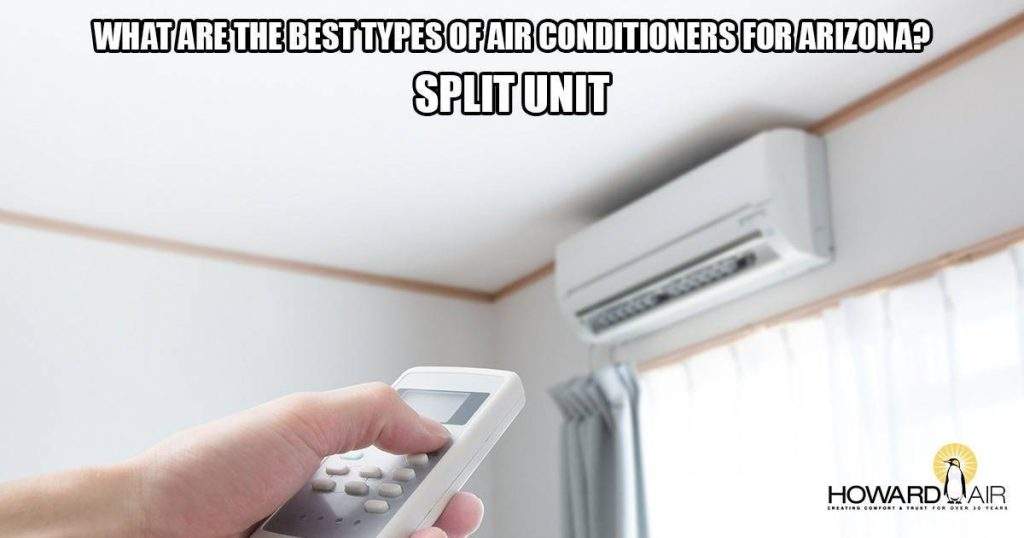
    Split Air Conditioning


    Howard Air – What are the Best Types of Air Conditioners for Arizona: SplitThe most popular form of air conditioning in Arizona, a split system has the benefit of being easier to maintain and work on, while efficiently cooling single- and multi-story homes. The split system works by having an exterior unit chill the air before it’s pumped into your home by an interior fan system that gets the cold air dispersed inside. The split system is popular because it can be installed to work on homes that don’t have a duct system for central air conditioning.
    Central Air Conditioning


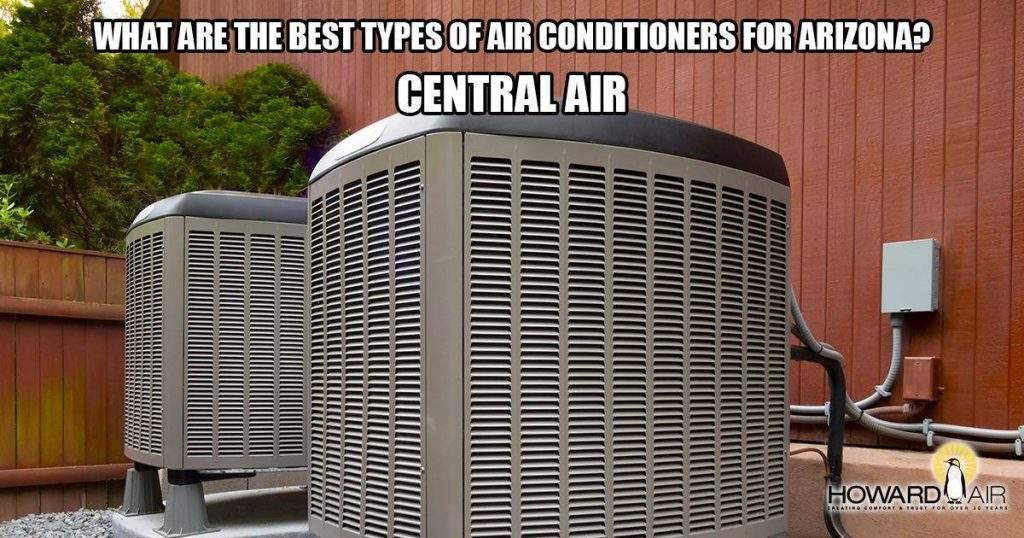
    Howard Air – What are the Best Types of Air Conditioners for Arizona: CentralIf your home has ductwork to support it, installing central air conditioning is often the best way to go. By pumping air through the vents, you’re able to cool your entire home without setting up units across your home to make sure everything gets air conditioning as is necessary with a split system, saving on costs when you initially get the unit. Carrier offers the best units around for keeping your home cool during the highest temperatures during summer.
    Room Air Conditioner


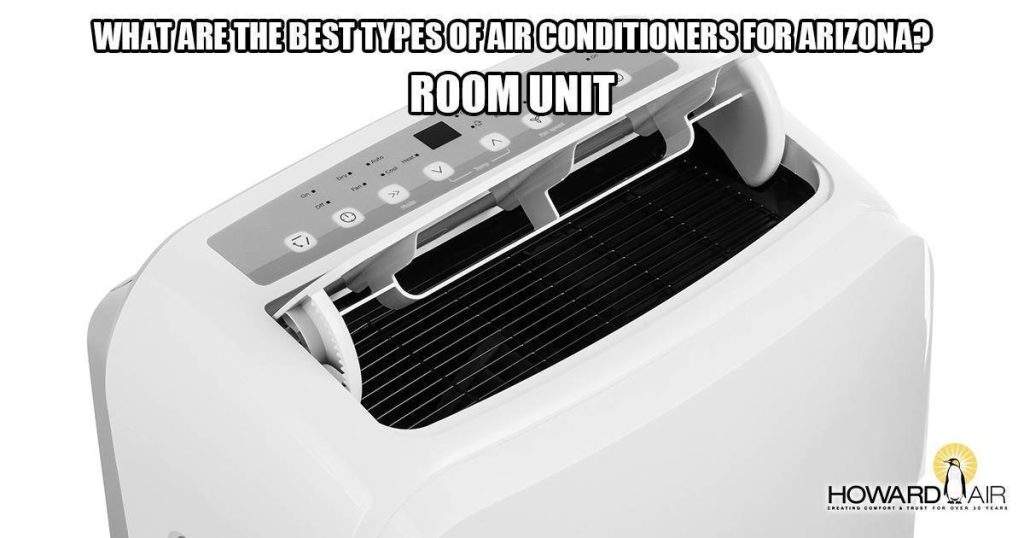
    Howard Air – What are the Best Types of Air Conditioners for Arizona: RoomIf you’re living in a smaller home or apartment, a room air conditioner might be your best option. They work the same way – chilling the air outside and blowing it inside – and are easily installed by placing it in a window. The best room air conditioner units will relatively inexpensive to operate, quiet when running, and will cool large rooms.
    Contact the Pros at Howard Air & Plumbing to Learn More

    Howard Air & Plumbing is here to install your new air conditioner in your home, and we’re committed to helping you choose the right system. Contact us so we can help get you and your home ready for the summer months for years to come.

  • Where Is My AC Filter Located and How Do I Change It?

    Where Is My AC Filter Located and How Do I Change It?

    When you’re looking for AC maintenance tasks you can do by yourself, it doesn’t get much easier than changing the filter. Once you know where to look and what to do, you’ll be able to change your filter within minutes – if not seconds. Best of all, this simple piece of HVAC maintenance can make a significant difference to your home’s air quality, which directly impacts your health and comfort.

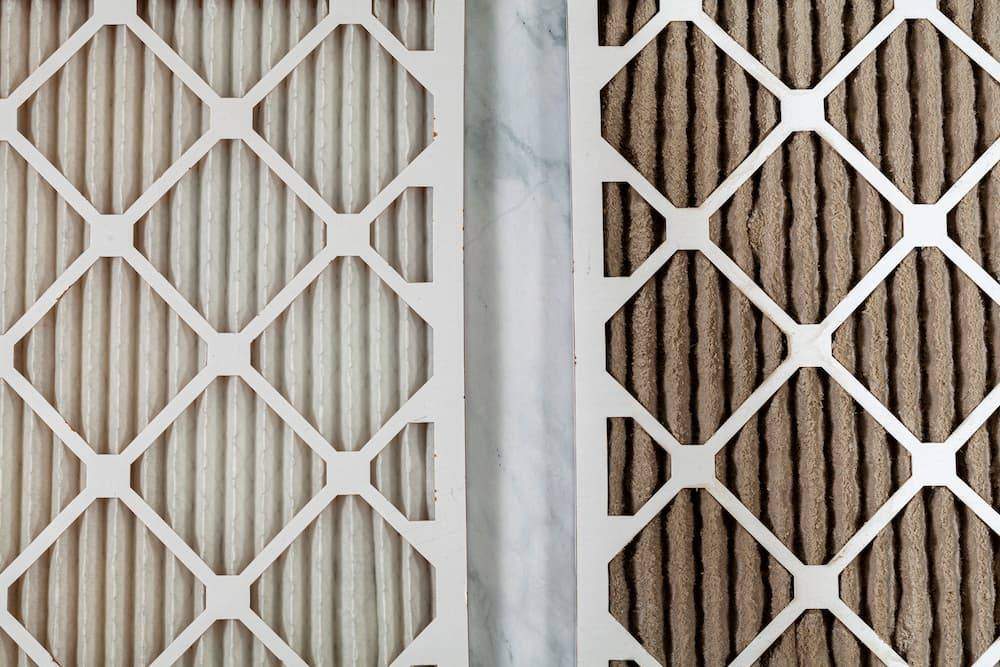
    • Prevent your filter from getting clogged – Over time, your HVAC filter collects dust, pet hair, and other contaminants. The dirt eventually restricts airflow, which makes it harder for your air conditioner to cool the home. Increased strain on your system leads to uncomfortable temperatures, high electricity bills, and an increased likelihood of needing HVAC repair or replacement.
    • Keep your air clean – Your air filter’s primary job is to ensure good air quality in your home or business. Clean air is vital for your health, as it helps to remove allergens, pollutants, and other harmful substances from the air you breathe. A dirty filter becomes less effective when you leave it for longer than you should. That means it cannot filter dust, germs, and other contamination out of your air as well as it should.

    Good air quality is important not only for the longevity and efficiency of your HVAC system, but also for the health of you and your family. Clean air helps prevent respiratory issues and reduces the spread of illness-causing bacteria and viruses.

    Most Common 2 Places to Find Your AC Filter

    “Where is my AC filter?” Once you’ve changed your filter enough times, you might forget that you ever had to ask this question. However, it isn’t always obvious your first time. If you have just moved into a home or apartment where you’re responsible for changing the filter, the first step is to find out where it goes. It will generally be in one of two places:

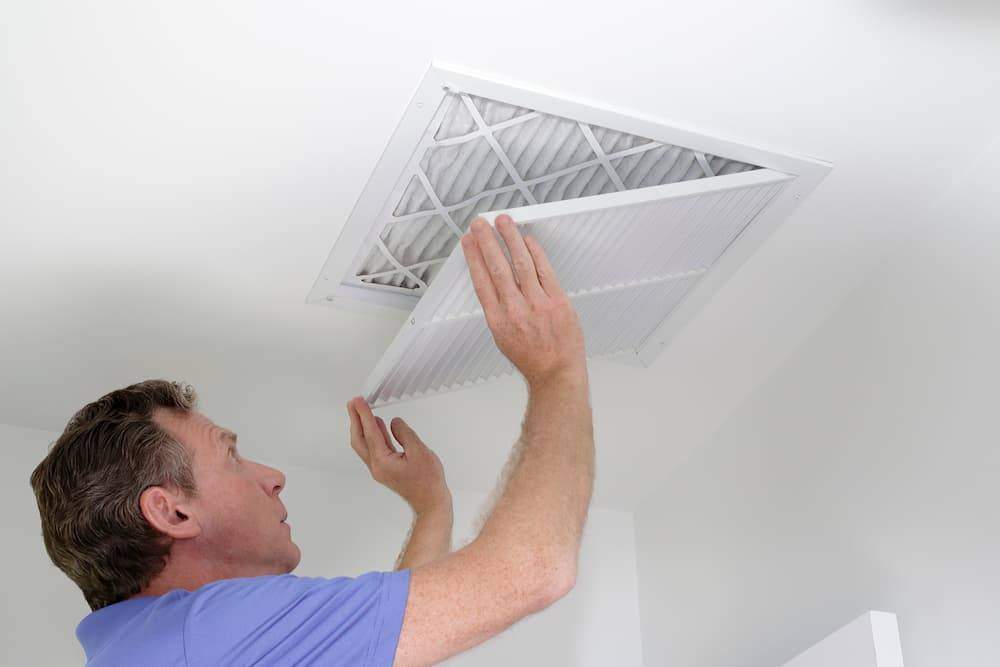
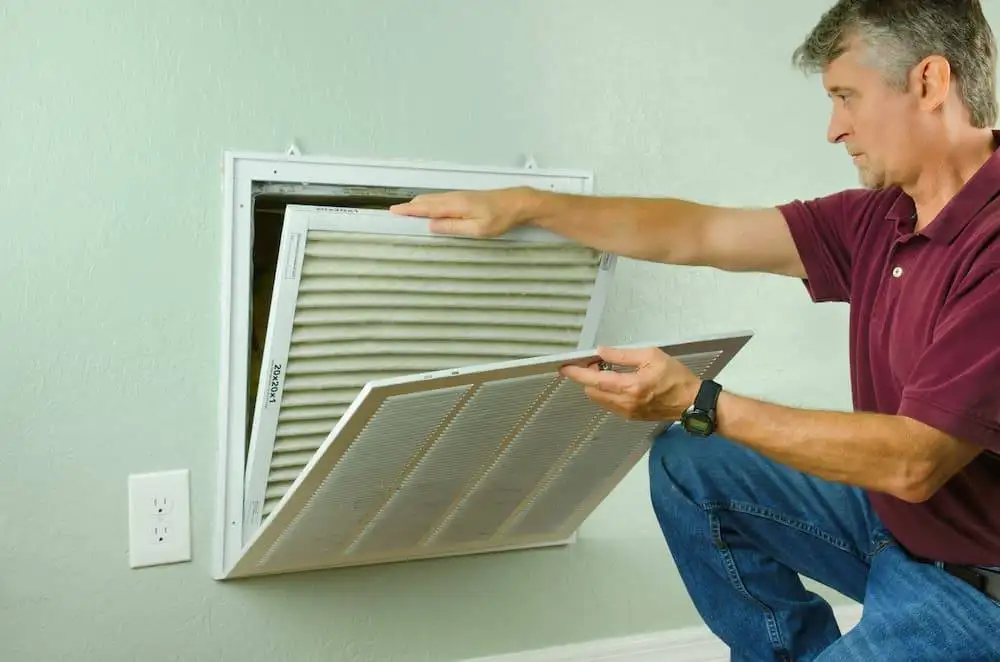
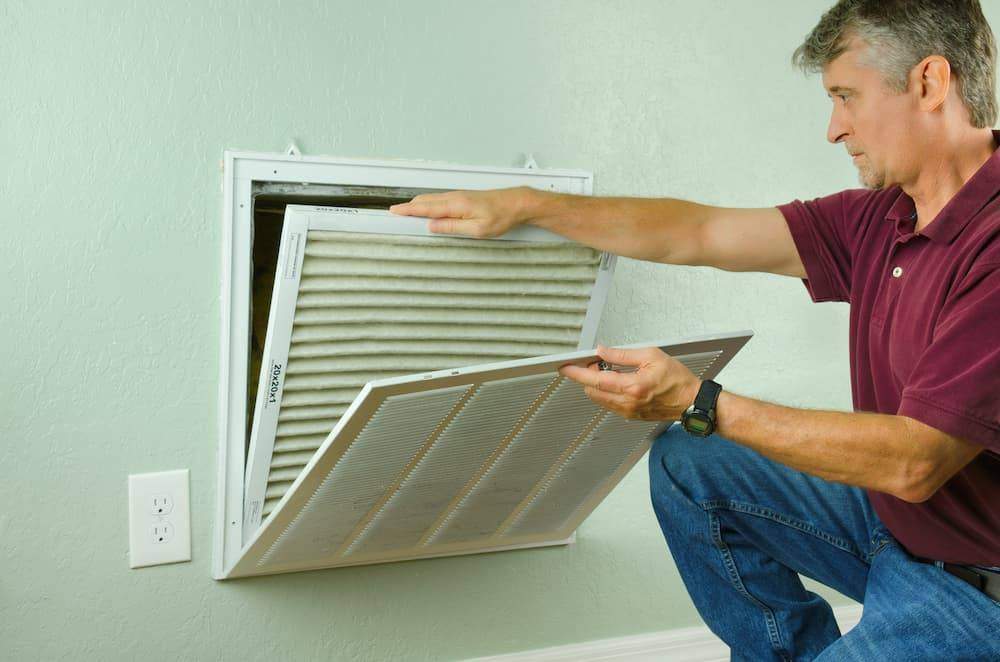
    1. Return Ducts: Some systems rely on return ducts located on the floor, wall, or ceiling. This might look similar to the other HVAC vents in your home, but the most significant difference is that the air goes into these vents instead of coming out. The return duct might also be larger than your other vents. If this applies to your system, you can remove the vent and replace your filter. Some HVAC setups use multiple return ducts, which makes it important to find them all.
    2. Air Handler: Most air conditioners have a filter in the air handler itself. This is the large metal box that stores most of your HVAC equipment. It might be in your attic or in a dedicated closet. If your home has a basement, there’s a good chance the air handler is down there.

    Once you identify the place for your air filter, you’ll also be able to see which type of filter you need.

    Important Step: USE THE RIGHT REPLACEMENT FILTER

    The HVAC filter size is almost always printed on the side of the filter. Assuming the appropriate filter was in there previously, you can replace it with the same kind of filter. To be safe, you can also look at your HVAC equipment or check the manual to confirm the filter size.

    Choosing the right size filter ensures a proper fit. If the filter is too big, you probably won’t be able to get it into your unit without damaging the filter or your equipment. If the filter is too small, air will be able to pass through it without being filtered properly.

    Common Issues People Face When Changing Their Air Filter

    While changing the filter is generally a simple process, there are a couple of problems people run into from time to time.

    • Too Much Dust in Your Air Ducts – Do you notice a massive dust and dirt buildup when you change your filter? If so, there’s definitely some type of problem. Your ductwork could be clogged, which means you aren’t getting proper HVAC airflow, and you’ll have difficulty keeping surfaces clean throughout your home.
    • A Wet Air Handler – Replacing your filter allows you to spot obvious signs of trouble. For example, you might notice water pooling around your HVAC air handler. Potential causes include problems with your drain, evaporator coil, or condensate line.

    Any of these problems will take you out of DIY space and require professional HVAC maintenance.

    How to Change Your Air Filter on AC Unit

    Once you know where to find your AC filter, which size to get, and some red flags to watch for, you’re ready to make the switch.

    You can generally follow these steps to success:

    1. Turn off your HVAC system.
    2. Open the filter compartment in your air handler or return duct.
    3. Remove the old filter.
    4. Check your old filter to see if it’s still fresh.
    5. If you have a reusable filter, clean it off. If you use disposable filters, throw them away once it’s dirty.
    6. Insert your new filter (or cleaned reusable filter).
    7. Close your filter compartment.
    8. Turn on the power to your HVAC system again.

    Let Howard Air & Plumbing Handle Your Home’s HVAC Maintenance

    At Howard Air & Plumbing, we understand the importance of good air quality for a healthy and comfortable home. That’s why we make sure to always provide reliable and efficient HVAC maintenance services.

    Howard Air & Plumbing is a trusted HVAC maintenance, repair, and installation service provider for homeowners and building managers in the Phoenix area. Our team of experienced technicians is equipped with the knowledge and tools needed to handle any HVAC maintenance task.

    Whether you need routine maintenance, emergency repair services, or a new installation, we are here to help. We take pride in providing reliable and efficient services and always make sure your filters are in good condition before we leave. Our team is available 24/7, so you never have to wait for help.

    Contact us today to learn more about our services and how we can help keep your home comfortable all year round.


    Image Credit: Serenethos/grandbrothers/Michael O’Keene/Shutterstock

  • How Does Air Conditioning Work?

    How Does Air Conditioning Work?

    Updated August 20, 2024

    You know your air conditioning system keeps your home or business cool in the hot summer months, but have you ever wondered how it works? One interesting fact you might not know is that your air conditioner and your refrigerator work primarily the same way. The difference is your refrigerator cools a small, insulated space, and an air conditioner keeps your home, office, or commercial space at a comfortable temperature.

    The Process of Cooling Your Home with an A/C

    Air conditioners are one part of a central heating and central cooling system that draws heat energy from outside of the home and transfers it.

    Simply put, the air conditioner in both a house and business is a central heating and cooling system that provides cool air through the sheet metal ductwork by providing via a process that draws out the warm air inside, removing its heat, which is replaced by the cooler air.

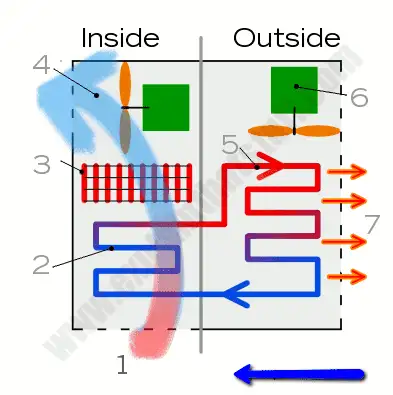
    The entire process of making the air in your property a comfortable temperature is based on a very simple scientific principle, and the rest is achieved by mechanical means. Let’s take a visual look at how air conditioning works to cool your home.


    How an Air Conditioning Unit Works:

    diagram of how an air conditioner works

    Your air conditioning unit uses chemicals that convert from gas to liquid and back again quickly. These chemicals transfer the heat from the air inside your property to the outside air.

    Parts of an Air Conditioner

    The AC unit has three key parts. These are the compressor, the condenser, and the evaporator. Your unit’s compressor and condenser are typically located in the outside part of the air conditioning system. Inside the house is where you will find the evaporator.

    The cooling fluid reaches the compressor as a low-pressure gas. The compressor squeezes this gas/fluid, and the molecules in the liquid are packed closer together. The closer the compressor forces these molecules together, the higher the temperature and energy rise.


    How Your Air Conditioner Removes Hot Air & Blows Cold Air

    This working fluid exits the compressor as a high-pressure, hot gas, and it moves to the condenser. The outside unit of an air conditioning system has metal fins all around the housing. These fins work like the radiator on a vehicle, and they help dissipate heat more quickly.

    When the fluid leaves the condenser, it is much cooler. It’s also changed from a gas to liquid because of the high pressure. The fluid makes its way into the evaporator through a minuscule, narrow hole and when the liquid reaches the other side of this passage, its pressure drops. When this happens, the fluid begins to evaporate to gas.

    The Removal of Hot Air

    As this occurs, the heat is extracted from the surrounding air. This heat is required to separate the molecules of the liquid into a gas. The metal fins on the evaporator also help exchange thermal energy with the surrounding air.

    When the refrigerant leaves the evaporator, it is once again a low-pressure, chilled gas. The process starts all over when it goes back to the compressor. There is a fan that’s connected to the evaporator, and it circulates air around the inside of the property and across the fins of the evaporator.

    The air conditioner sucks air into the ducts through a vent. This air is used to cool gas in the evaporator, and as the heat is removed from the air, it’s cooled. Ducts then blow air back into the house.

    How Air Conditioners Maintain Consistent Cooling

    This process continues until the inside air of your home or business reaches the desired temperature. When the thermostat senses that the interior temperature is at the desired level, it shuts the air conditioner off. When the room heats up again, the thermostat turns the air conditioner back on until the preferred ambient temperature is achieved again.


    Trust in Howard Air & Plumbing for All of Your Phoenix Area A/C Needs

    The great news is that you don’t have to know how an air conditioning system works to enjoy its effects! At Howard Air & Plumbing, we can help you if your system is going out, you want to upgrade to a new air conditioner, or if you’ve got any questions. We understand air conditioning, and we are here to provide our valued customers with exceptional service, quality repairs, and professional installations. Click here to email us or call (623) 201-5153 to speak with a representative immediately.


    *Diagram credit: Explainthatstuff.com

    Main Contact Form

    "*" indicates required fields

    This field is for validation purposes and should be left unchanged.
  • EPA Warns That Recharging Air Conditioners with Wrong Refrigerant Poses Injury, Fire Risks

    An air conditioner recharge not done properly can be very dangerous. Recently, the Environmental Protection Agency (EPA) warned consumers of the numerous safety hazards involved in using propane in both home air conditioners and motor vehicle AC systems.


    What’s the problem?

    At Howard Air & Plumbing, we know what a serious issue it can be when someone uses a propane-based refrigerant in an AC unit that’s not designed to use propane. Not only does it cause a threat to technicians working on air conditioning repair, but it can cause serious danger for homeowners.

    The main issue is that if a system is recharged with what’s known as 22a, which is an often-used but non-approved alternative, it can catch fire or even explode. Obviously, this can lead to injury, damage to property, and potentially lead to a fatal accident.


    EPA Looking Into the Issue

    The EPA is currently investigating various instances where propane-based, “22a” refrigerants have been marketed illegally as substitutes for HCFC-22, the actual substance that should be used. The agency says they’ll take action when necessary, including legal and criminal.


    What’s in 22a?

    Marketed sometimes as 22a and sometimes as R-22a, this type of refrigerant is highly flammable and includes hydrocarbons like propane. It’s being sold to both individuals and contractors and marketers are claiming that it works to recharge both car air conditioning systems and home air conditioners.

    However, these systems weren’t designed or manufactured to handle any type of flammable refrigerant.


    Recent examples of EPA enforcement

    In March of 2016, a man was arrested in Louisiana for selling a product he called “Super-Freeze 22A.” It was made almost entirely of propane. He was selling it to air conditioner repair technicians and owners of equipment, few of whom knew the product was flammable.

    See also: FBI Seeking Victims of Super-Freeze 22a

    In January of 2016, a company in Kansas agreed to stop marketing and selling a propane-based substitute, to send letters to customers sold the substitute, and pay a $100,000 penalty. Another company in Illinois also agreed to stop selling their non-approved product and pay $300,000 in penalties.


    Howard Air & Plumbing AC Repair & Maintenance

    At Howard Air & Plumbing, our best advice to customers is to work with technicians and contractors who follow the manufacturer’s recommendations. Not only can recharging a cooling system with an unapproved refrigerant be dangerous, but it can also void a manufacturer’s warranty.

    Does your air conditioner need to be recharged or serviced? Contact Howard Air & Plumbing today and let our trained, professional, and honest technicians provide you with service and products that are approved by your air conditioner’s manufacturer. Keep your family cool and safe!

  • 21 Things that Will Go Wrong with Your Home Heater

    21 Things that Will Go Wrong with Your Home Heater

    During the colder months, families all across the United States rely on furnaces to heat their homes, but many fail to keep up with regular maintenance. Still, even the most well-maintained systems can have minor hiccups that require heating repair. Here are 21 things that can go wrong with your home’s heater.


    1. Safety Switch Left On

    If your home heater does not turn on, this could be due to the safety switch on the furnace floor being on.


    2. Tripped Circuit Breaker

    If the circuit breaker trips power to the furnace, it will not turn on until the circuit is reset.


    3. Dead Thermostat Batteries

    Not all thermostats use batteries, but if yours does, it will generally show a low-battery symbol when it is time to change the batteries.


    4. Faulty or Damaged Thermostat Wiring

    For thermostats that are connected to the house’s main electrical system, faulty or damaged wiring to the thermostat may cause it to malfunction.


    5. Ignition Failure

    If after inspecting the unit the igniter looks cracked or otherwise damaged, you will need to replace it.


    6. No Pilot Light

    If there is a cold draft blowing through your heating system or blockage, the pilot light may go out.


    7. Incorrect Temperature

    If the thermostat is not set to at least five degrees higher than room temperature, you will not notice a difference in temperature.


    8. Bad Limit Switch

    A bad limit switch will cause the blower to keep running at all times. This will burn out the blower ahead of its usual lifespan.


    9. Clogged Filters

    When filters are clogged, the system is less effective and less efficient.


    10. Loose Panels

    This doesn’t usually affect the heating of the home but will cause a disturbing rattling noise that may disrupt sleep and concentration.


    11. Bad Motor Bearings

    If you hear grinding sounds, call a repair technician as your motor bearings may be going bad and will need to be repaired.


    12. Loose Belts

    Loose belts also make strange noises in the heating system and may lead to poor air circulation and overheating.


    13. Blocked Vents

    Another reason for poor air circulation is blocked vents.


    14. Gas leakage

    Gas leakage is a fire hazard and can also lead to carbon monoxide poisoning. Never postpone gas heater repair.


    15. Oil Burner

    The older the system, the more likely you are to experience oil burner problems. Keep the filter clean to lessen the likelihood of this happening.


    16. Fire Hazards

    To avoid worsening the likelihood or extent of fires, refrain from storing flammable objects near the furnace.


    17. Contaminated Burners

    Debris can cause burners to become contaminated and stop working. Clean burners burn blue, while dirty burners usually have yellow flames.


    18. Unlubricated Burner

    The furnace blower should be lubricated once per year to help extend the lifespan of the home’s heater system.


    19. Ice in the System

    If ice is clogging your system, do not ignore it. Clear away the ice and call professionals to diagnose and rectify the problem.


    20. Dirty Flame Sensor

    A dirty flame sensor is dangerous as the flame sensor forms an integral part of the safety mechanisms of your heating system and may cause your furnace to malfunction.


    21. Old Age

    Even the best-built furnaces don’t last forever. After about 10 to 25 years, you will need to replace your HVAC system.

    No one wants to be freezing at home for the holidays. If you notice your home heater is making strange sounds, isn’t heating up the house effectively, or won’t turn on at all, call a professional before it’s too late. If you live in or around the Phoenix area, we would be happy to help. Contact us at Howard Air & Plumbingr, and we’ll get your furnace up and running again in no time!

  • Examples of Indoor Air Conditioning to Consider

    Examples of Indoor Air Conditioning to Consider

    Visiting friends and neighbors in Phoenix is a good way to find all the examples of indoor air conditioning a house can have. Whether you run a Valley business or have settled in Carefree for a carefree retirement, four types of air conditioning are the kings of cooling.

    Four Examples of Indoor Air Conditioning Systems

    If in an air-conditioned building, you’re likely to have one of the following types of air conditioning systems to thank.

    Split Systems

    Your ace in the hole for central air conditioning, the split system is very common. One part of the equipment sits outside (the condenser coil, fan, and compressor) and another component sits inside (the evaporator and cooling coil).

    The cooling coil is joined to the ductwork (the same ductwork the furnace uses) of your home or business, and an air handler or blower moves cool, dehumidified air throughout your building. Plan to spend around $3,000 to $5,000 on a split system or single-unit system, says CostOwl.com, or more if your home needs new ductwork.

    Single-Unit Systems

    A packaged air conditioner puts all the components together, often on the roof or on concrete next to a foundation. Ductwork runs through the roof or wall, pulling building air out to the unit and returning cool air from the single unit.

    These air conditioners offer flexibility, as you can add as many single units as you need for an expanding business, each unit working to cool one area.

    Heat Pumps

    Heat pumps are all heart; they can provide heating and cooling (within limits) so they offer year-round economy. A heat pump removes heat from your indoor air and pushes it outside in cooling mode. In heating mode, it gathers heat from outdoor air and blows it gently into your home.

    Heat pumps cannot cool or heat to the extremes that central air conditioners and furnaces can, but for many Valley structures, heat pumps perform very well. An air-source heat pump will run between $2,500 to $7,500, according to CostOwl.com.


    Howard Air - Mini Split System A/C Unit

    Ductless Mini-Split Systems

    Clever, but not the joker in the deck, ductless mini-splits mount on a convenient exterior wall and allow for quick relief in the home or business additions and in spaces previously difficult to cool. These are also the least expensive air conditioners but will only cool a limited area. CostOwl.com puts the average cost at $3,000.

    Contact Howard Air & Plumbing for Help Choosing the Right A/C Unit for Your Needs

    The expert technicians at Howard Air & Plumbing can install any of these air conditioning systems. Please contact us today at (623) 201-5153 if you have further questions about these different types of AC systems, or to schedule a selection and installation appointment.