Author: admin

  • 10 Reasons Why Your Gas Furnace is Not Working

    10 Reasons Why Your Gas Furnace is Not Working

    10 Reasons Why Your Gas Furnace is Not Working

    Is your gas furnace not switching on or warming the air as expected? If yes, you need to understand that many different issues might have led to this problem. A properly functioning gas furnace is crucial because it will ensure that your central heating system warms up the air in your home keeping you and your loved ones warm through the chilly winter season. Most furnaces, gas ones included, will last approximately 15 to 20 years. So if yours is way younger than this, there’s a good chance you can get it up and running again.

    Ever found yourself asking this question, “my gas furnace isn’t working, what do I do?” Our quick response is this: you should troubleshoot to check the cause of the problem, or if you cannot do this, you need to contact a certified HVAC contractor. You cannot troubleshoot the problem if you do not have a basic understanding of how your gas furnace works. So, let us look at how the gas furnace works.

    How Your Gas Furnace Works (Or Should Be Working!)
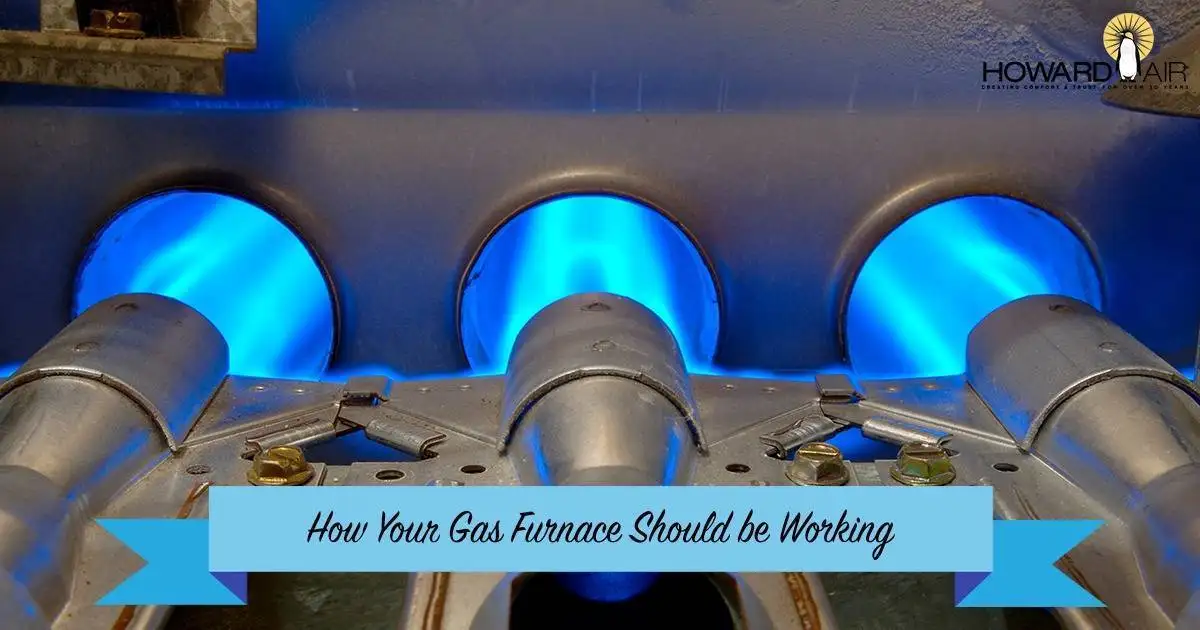
    Howard Air - Gas Furnace Not Working? How Gas Furnaces Work
    Featured image credit: Carolina K. Smith MD/Shutterstock

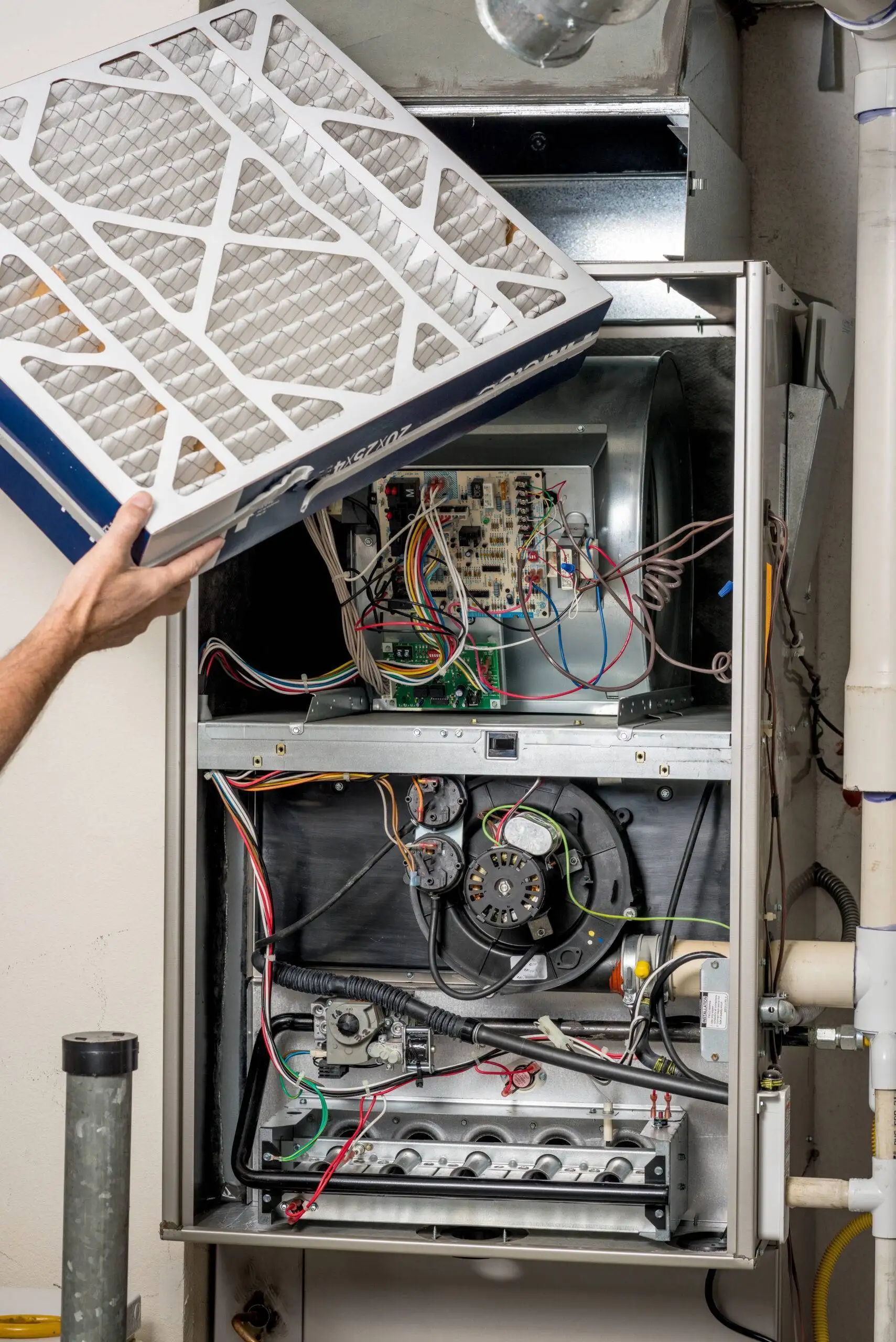
    Your gas furnace, commonly referred to as a forced-air furnace, works by heating the air coming into your home through a heating cycle that follows the following sequence:

    1. The burner ignites propane or natural gas
    2. The flames from the burner heat up a metal heat exchanger
    3. Heat is transferred from the metal heat exchanger to the incoming air
    4. The warm air is forced into the ductwork by the furnace blower causing the warm air to circulate through your home
    5. As the warm air flows and fills your home, colder air is displaced and pushed into the furnace for heating.

    A properly functioning gas furnace will work following the five steps discussed above. For your furnace to serve you for long, you need to ensure that it is serviced at least once or twice a year. This will ensure that you get uninterrupted service during the cold winter season.

    10 Most Common Furnace Problems
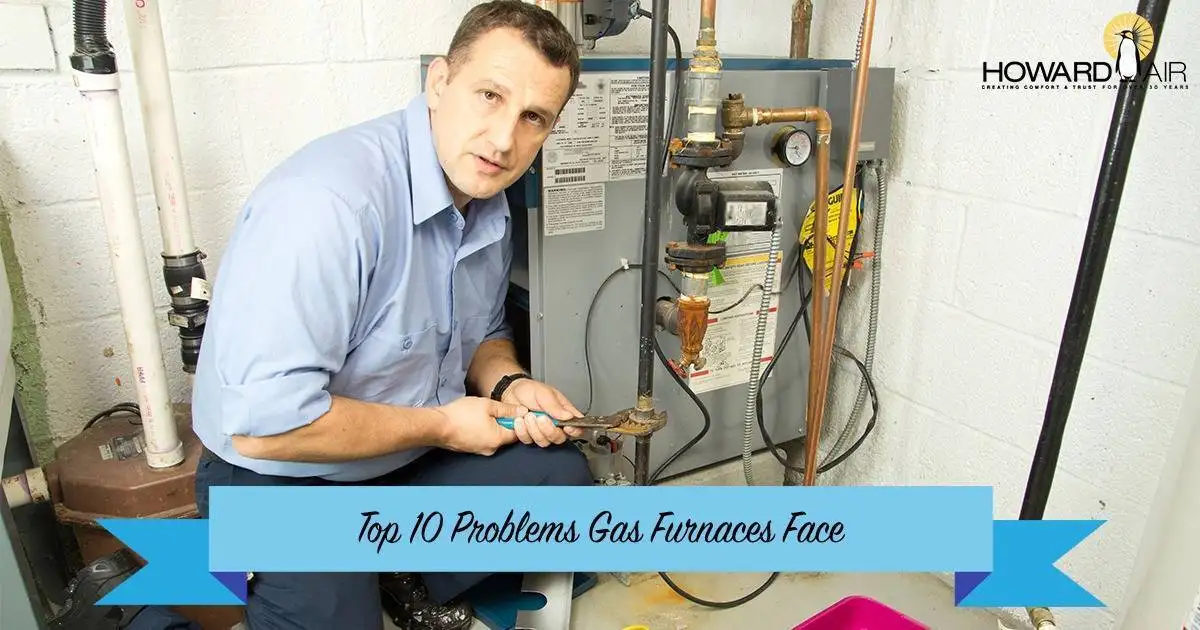
    Howard Air - Gas Furnace Not Working? Major Problems
    Featured image credit: Globalphotogroup/Shutterstock

    In this guide, we discuss the top ten common furnace problems with matching suggestions on how these issues can be resolved. If they cannot be resolved, you may have to look at other options like buying a new gas furnace. These problems include:

    • Lack of maintenance
    • Wear and tear
    • Dirty filters
    • Ignition problems
    • The furnace does not heat at all
    • Malfunctioned thermostat
    • The furnace does not heat enough
    • Blower runs continuously
    • Frequent cycling
    • The furnace is too noisy

    The list above is not extensive, but at least we have tried to capture some of the most common problems. By knowing these common problems, we believe that you, as the homeowner, can take proactive measures aimed at preventing most, if not all of them. Let us now delve deeper and discuss each of these furnace problems:

    1. Lack of routine maintenance

    As stated earlier, regular maintenance is the key to ensuring that your gas furnace operates properly throughout the year. We suggest that you consider servicing your furnace at least one to two times in a year. During this routine maintenance, your HVAC repair technician might discover a problem with your heating system and suggest ways of dealing with it before it worsens. Addressing a problem with your central heating system will save you money.

    2. Dirty or clogged filters

    Filters help in purifying the air coming into your home. They help in keeping dirt out, thereby ensuring that the air circulating in your house is clean and free of impurities. Since the filters bar dirt and other pollutants from getting into your home, it is essential that you clean the filters regularly to prevent them from clogging. Clogged air filters can damage the filter switch affecting the status of the HVAC system.

    3. Wear and tear

    Equipment and appliances often suffer from wear and tear after prolonged work. If your heating repair contractor finds that your gas furnace or some of its components are worn out, ask for recommendations or suggestions on how to replace them.

    4. Ignition problems

    Older gas furnaces have pilot lights while newer versions have electric ignition. The pilot or electric ignition might be the cause of your furnace problems. If the pilot light fails to stay lit, this may be a result of issues such as a clogged pilot orifice, a loose or faulty thermocouple, a defective safety cutoff valve, or the pilot’s flame may have been set too low. For gas furnaces with electric ignition, the ignition problem may present issues where the furnace keeps shutting off after a short while. This can be resolved by powering off the unit then switching the power on again; a move that will reset the ignition control module.

    5. The furnace does not heat at all

    If you discover that your furnace does not heat at all, it is crucial for you to consult with your local HVAC repair technician. Since heating is the primary function of your gas furnace, you need to have this problem looked into by a competent repair technician. A furnace that is not heating may be having problems with its power, gas, pilot light, or thermostat setting.

    6. The furnace does not heat enough

    In some cases, you might realize that the furnace is functioning properly, but the heat generated is not sufficient to heat up the air in your home. When this happens, it is essential for you to check with your technician whether the HVAC unit you have is the right size for your home. You also need to have the current unit checked if it has clogged filters, which might also cause this problem.

    7. Malfunctioning thermostat

    The thermostat helps in regulating the heating cycle. When the home is sufficiently heated, the thermostat is supposed to tell the control board inside the furnace to stop the heating cycle. When the thermostat malfunctions, the air inside your home can be heated to an uncomfortable level. You need to contact your heating repair technician to correct this as soon as possible.

    8. Blower not working

    The blower functions by directing the air coming from return ducts to go into the hot heat exchanger. When you discover that the blower is not working on the gas furnace, you need to contact a professional to replace it for you.

    9. Frequent cycling

    A gas furnace that is frequently cycling from “On” and “Off” modes is indicative that the furnace has a problem with its thermostat or the air filters may be clogged. Your repair technician should be able to troubleshoot the problem and have it fixed in no time.

    10. A noisy furnace

    A noisy gas furnace that rumbles, rattles, or squeaks needs to be checked by a professional HVAC contractor. Such noises are not normal and may indicate a mechanical problem with your furnace.

    Consult a Certified HVAC Technician if All Else Fails
    Howard Air - Gas Furnace Not Working? Get Help from Certified HVAC Pro
    Featured image credit: Globalphotogroup/Shutterstock

    Most of the problems highlighted above need the attention of a qualified HVAC technician who will be able to diagnose the problem and repair it. Don’t risk worsening the problem or exposing yourself or your loved ones to gas or combustion-related hazards by trying to fix some of these complex problems by yourself. It is always a good idea to take adequate precautions and contact a trained furnace repair expert to examine your unit and suggest how the issue should be handled.

    See also: The Arizona Gas Furnace Buyer’s Guide

    If your furnace presents any of the problems discussed above, you can always count on us to resolve the issue for you. At Howard Air & Plumbing in Phoenix, we are committed to ensuring that all our customers get the best heating and air conditioning services. Our technicians are trained, experienced, and certified to handle any furnace-related problems. Contact us today at (602) 953-2766 to schedule a consultation with our team of experts.

    Featured image credit: Asier Romero/Shutterstock

  • Furnace Ignites Then Turns Off – What’s The Problem?

    Furnace Ignites Then Turns Off – What’s The Problem?

    Furnace Ignites Then Turns Off – What’s The Problem?

    When you try to turn your furnace on, and nothing happens, you know something is wrong. If the air coming out is cold when it should be warm, you should call an HVAC contractor. What happens when the furnace kicks on, blows warm air and then shuts down before the room is heated? There is just as much need to find out what the problem is when this happens as there is when the furnace simply refuses to operate. Not only does your home remain uncomfortable, but the chances of the furnace not working at all are increased if the problem isn’t fixed now.

    Here is what we find to be the biggest causes of this on and off cycle, which is referred to as short-cycling.

    A Complicated Thing

    Your furnace is made up of many complex systems that all work together to ensure you have a comfortable temperature in your home. Many of these are switches that operate in a chain reaction. If one fails, it halts the whole chain of those that come after. There are also many safety features in a furnace that help keep it safe for your family. If the furnace is experiencing problems that could result in a fire, it may fail to ignite properly. Keep this in mind when the frustration hits. Here are other reasons your furnace may be short-cycling. In all cases, it is important that you don’t have anyone work on your furnace that is not trained as an HVAC specialist. Many things in your home lend themselves to DIY; your furnace is not one of them.

    #1 Flame Sensor

    The flame sensor does exactly what it sounds like, it senses when the flame of the furnace is on and sends a message to the control board to start blowing warm air. If dirt or dust covers the sensor, the flame isn’t detected, and the furnace shuts down. Sometimes all that is needed is a simple cleaning of the flame sensor, but it may also be worn out and need to be replaced.

    #2 Flame Rollout Switch

    This switch keeps track of how hot the burners are. If air doesn’t reach the burner and then open the flue that releases the heat, the flame rollout switch will shut the furnace down, so it doesn’t get too hot and catch fire.

    #3 Pressure Switch

    The pressure switch is tripped when enough air flow is sensed for ignition to continue. If something prevents an adequate amount of air flow, the switch won’t operate, and the furnace will cease to continue firing up.

    #4 Control Board

    This is the brain of your furnace. It receives messages from all the other parts of your furnace. Any disconnect in allowing messages through will prevent the control board from allowing your furnace to work properly. The control board itself may become defective if wires disconnect or fray power will not be sent to run the furnace.

    #5 Draft Inducer Motor

    This motor is responsible for drawing air into your furnace and through the burner. This causes the pressure switch to react, which sends a message to the control board that all is in order. If this motor fails, the air is not drawn into the furnace, and the process of ignition is halted.

    Air Flow

    As you can see from the above causes, proper airflow is necessary for a furnace to function at top form. If your furnace is located in a place where it is unable to experience proper airflow above, below, and around it, you will have problems with the furnace operating properly. The best way to find out if your furnace is located in an appropriate place is to have a heating repair specialist come in to check your furnace. While they do a yearly maintenance check, they can also tell you if your furnace would operate better if moved.

    Final Words

    If your furnace comes on and then shuts off, and you don’t feel comfortable, contact us for an evaluation of the problem. Your furnace serves an important role in keeping your family comfortable. It is essential that any work is done by an HVAC specialist who has been trained to understand how the furnace works. Not only is comfort involved but also safety is as well. If it has been a while since you have had a furnace check-up, have one of our representatives give it a look once over to make sure you won’t be left out in the cold when you most need your furnace to cooperate. Your comfort is our greatest goal here at Howard Air & Plumbing in Phoenix. 

    Schedule an appointment today!

    Feature image: Dmytro Zinkevych on Shutterstock

  • How Much Does an A/C Fan Motor Replacement Cost?

    How Much Does an A/C Fan Motor Replacement Cost?

    Late June in Phoenix, AZ can see the temperature reach 110°F and top 99°F nearly every day the rest of the summer. With this heat, you want to ensure your air conditioner and all of its components are working well together to keep your home cool and comfortable. One of the most common component failures Howard Air & Plumbing regularly sees is a broken fan motor. We will discuss what the A/C Fan motor does and when you need to replace it to avoid more costly repairs.

    What is a Fan Motor & What Does it Do?

    When your home is having trouble cooling down, it might be time to replace the air conditioner’s condenser fan motor. The fan motor keeps the compressor from overheating and helps cool your home by cooling the superheated refrigerant that flows through the air conditioner’s condenser coils.

    Additional parts in your air conditioner might rapidly stop operating without a functioning fan motor, causing the need for additional repairs and the stress and potential dangers of a sweltering home.

    Signs You Need to Repair Your A/C Fan Motor

    If your air conditioning unit is producing unusual noises, the type of noise can guide you to the underlying problem. If you hear either of the following noises, it could indicate the fan motor is failing.

    • Rattling A rattling sound could mean that the fan motor or some of its components have loosened or are beginning to malfunction, but it could also be something else, like the fan blades scraping against the metal housing. Your Howard Air & Plumbing technician can inspect the unit to see what other issue could be causing the sound.
    • Screeching A metal-on-metal sound typically indicates that the bearings in your ac fan motor are failing. If you hear screeching from your air conditioner, it is crucial to address it as soon as possible by having it inspected.

    How Much Does an A/C Fan Motor Replacement Cost?

    The A/C fan motor cost can range from $900 to $1,800 for a replacement depending on warranty status, model and brand. It’s critical to get this replaced as soon as possible because if the ac fan motor fails, your air conditioner’s compressor is likely the next component to break. Replacing the compressor costs considerably more, ranging from an average of $2,500 – $6,500, depending on the brand.

    Avoiding Air Conditioning Breakdown

    Regular maintenance is the most effective approach to prevent a malfunctioning fan motor or any other type of air conditioning issue. Your qualified Howard Air & Plumbing  technician will examine and repair any parts in need during a maintenance visit to verify that your air conditioner is operating properly and efficiently to handle the Phoenix heat.

    While air conditioning preventative maintenance does have a small upfront cost, you will save money in the long run by preventing more costly repairs and prolonging the useful lifespan of your air conditioning unit. This will also be comforting to know that when your air conditioner is battling the Phoenix summer heat, it is ready and up to the task.

    Get Your A/C Fan Motor Replaced Fast With Howard Air & Plumbing

    Your air conditioner’s fan motor is one of the most critical components within the system, cooling the superheated coolant and keeping the compressor from overheating. By completing preventative maintenance and having your air conditioner inspected either when you hear unusual noises or during a pre-summer annual inspection, you can help prevent breakdowns when you truly need to cool your home. The AC fan motor cost to repair is significantly cheaper than replacing the compressor so that preventative maintenance can save you money in the long run.

    Since 1977, Howard Air & Plumbing has been Phoenix’s trusted source for expert heating and cooling services. We are so confident in our technicians’ expertise and ability to repair and maintain your system that we will return free of charge in the unlikely event you experience a failure after service. To beat the heat, trust Howard Air & Plumbing.

    Schedule your inspection today or call us anytime, day-or-night for emergency service!

    Image Source: William Hager / Shutterstock

  • Furnace Thermostat Not Working? Here’s What To Do

    Furnace Thermostat Not Working? Here’s What To Do

    Is Your Furnace Thermostat Not Working?

    You try to set the heat in your home, and the furnace doesn’t kick on. Panic is usually the first emotion. The thought that your furnace may need to be repaired or replaced is a daunting one. HVAC repair does not come inexpensively. If your furnace seems to check out okay, isn’t that old, and has had regular maintenance checks, the problem may be as close as your thermostat.

    Thermostat maintenance is what Howard Air is good at! We have all the expertise to help set up your home for success.

    Your Thermostat

    Your thermostat is the “brain” that tells your furnace what you want it to do. When your furnace thermostat is not working, your furnace does not know if it needs to work to heat up your home or if it can rest. Most common issues with thermostats can easily be fixed if you know what to check for. Here are the things you need to check and what you can do if this is where the problem originates.


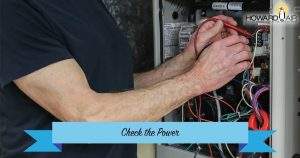
    Check the Power to make sure your thermostat is working correctly. Howard Air

    Check the Power

    Thermostats get their power from one or more of three different sources, depending on the type of thermostat you have.

    • Check to see if the battery is old and no longer working. If so, a simple replacement will have you back up and running.
    • Check for a blown fuse that needs replacing. Replacing the fuse is quick and easy.
    • Check your circuit breaker. Many newer thermostats are hooked to the electrical system. If the circuit breaker is tripped, you need to only flip the switch back to the on position.


    Dust can prevent your thermostat from working its best for your home. Howard AirCheck for Dust Bunnies!

    Thermostats are susceptible to dust like any other electronic device. Carefully remove the outer cover of your thermostat and use either a small paintbrush or canned air. If using the air, gently blow off any dust. If using the paintbrush, try to use as light of pressure as you can to still remove the dust.

    In either case, you want to make sure you get all areas inside the thermostat. To do this, turn the thermostat to its lowest position and clean the right side. Then turn it all the way up and clean the left. Now you can put it wherever you feel comfortable. If dust was the problem, the furnace should now be working fine.


    Are There Loose Wires?Loose Wires can cause your thermostat to work incorrectly or not as efficient. Howard Air

    Any time wires are involved there is a chance of one coming free, or completely disconnecting. As you change the setting on your thermostat over time, the wires can become loose or break. This will most likely need to be handled by an HVAC person as wiring that is not handled correctly can cause a fire hazard. If there doesn’t appear to be any broken wires, but moving a wire or two causes your furnace to kick in, set up an appointment to have the thermostat serviced or replaced.


    Is your thermostat in the right location? Where is the best spot for my thermostat? Howard Air has answers.Is It In The Wrong Location?

    This is most likely to happen if you have recently installed a thermostat or done some renovation that changes the structure of things within your home. Make sure the thermostat is not near any natural light source, like a window.

    Warm sunshine can trick the thermostat into thinking it is warmer in the house than it is. A cold breeze from a window or other crack can make the opposite impression. The thermostat should ideally be placed on an interior wall somewhere near the center of your home. In that way, it can get the most accurate gauge of the inside temperature. Moving the thermostat will require an HVAC contractor.


    Age of Thermostat

    Age of thermostat can affect its usefulness. Howard Air is here for you!

    Nothing is made to last forever. Thermostats get old and wear out like any other object. If yours is old, or if you have no idea how old it is, consider having a specialist come to check it out. Replacing an old thermostat with a newer model may not only solve your furnace issues but could help you save both energy and money. More modern thermostats are more energy efficient. They also work with less effort than an older model that is starting to get old. You may even opt for a programmable thermostat that can save you an even more considerable amount of money.


    Contact Us For Thermostat Questions

    Can a bad thermostat cause your furnace not to work? As you can see, the answer is a resounding: Yes, it can. The best way to avoid surprises with both your furnace and your furnace thermostat is to have regular maintenance done on your home’s heating system. At Howard Air & Plumbing in Phoenix, we would rather spend time checking out your system before it needs repair because we know you’ll be much happier than if you need to call us for a heating repair. Contact us today and set up an appointment to have Howard Air & Plumbing check your HVAC system thoroughly and optimized it. We won’t leave you out in the cold!


    Photo Credit: Shutterstock Images

  • Benefits of an AC Hard Start Capacitor Kit

    Benefits of an AC Hard Start Capacitor Kit

    Hard start kits used to be a standard feature of nearly every air conditioning unit, but in recent years, manufacturers have eliminated them in an effort to cut down on production costs. Hard start kits are now one of the most popular aftermarket accessories for air conditioners. If you’re wondering if an AC hard start kit is right for your needs, there are a few factors to consider. Though they offer a range of benefits, they can also be detrimental if they are used or installed incorrectly. If you want to take advantage of the benefits that a hard start capacitor can offer, it’s important to understand how to use it properly — and, more importantly, invest in the professional installation by an HVAC professional.

    What Is a Hard Start Kit?

    An AC hard start kit is used to power up an air conditioner unit that may otherwise have difficulty turning on. This difficulty can arise for many reasons, but one of the most common causes is a compressor that’s become worn out over time. When this happens, it may struggle to power on, but a hard start kit can help resolve the issue. An AC hard start kit consists of two parts that work in conjunction to achieve this — the hard start capacitor and the potential relay. The capacitor works by storing energy within the unit and shortens the time your unit requires to start. This, in turn, reduces the amount of electrical energy that the startup requires, too. With minimized pressure placed on the compressor, your unit will be able to power on with no problem.

    What Are the Advantages of a Hard Start Kit?

    Helping a troubled unit power on more easily is just one of the benefits of a hard start kit. Prior to installing a hard start kit, you might have considered replacing your compressor, but a hard start kit is often easier and more affordable! There are many other advantages you can enjoy when you install an AC hard start kit in your AC unit — and some people opt to install one even if their unit doesn’t have any compressor issues. A hard start capacitor is particularly beneficial because it can improve your air conditioner’s overall functionality and efficiency. Consider these other benefits that you can enjoy when you add an AC hard start kit to your air conditioning unit.

    Extends Compressor Lifetime

    One of the most common motivations for installing a hard start kit is preserving the compressor of an AC unit. A compressor can cost anywhere from $2,500 to $6,500 to replace, whereas it typically costs less than $500 to install a hard start kit. This makes it clearly worthwhile to invest in a hard start kit and extend the lifetime of your compressor for as long as possible. An AC hard start kit can protect your compressor by minimizing the wear and tear that it endures during your unit’s startup process. The hard start capacitor handles the brunt of the action and enables your compressor to last much longer than it otherwise would.

    Assists With Low Voltage Problems or Improper Wiring

    A worse-for-wear compressor isn’t the only problem that a hard start kit can help to address. If your AC unit struggles to power on due to low voltage or improper wiring, an AC hard start kit can provide a solution to these problems, too. Sometimes a compressor is in perfectly fine condition, but it simply does not supply enough voltage to start the unit in a timely manner. Similarly, you might have a unit in acceptable condition, but a matter of faulty wiring prevents it from starting consistently. In both of these cases, a hard start kit can be used to ensure your unit’s ability to power on. It can do so by providing the unit with power that’s stored within the hard start capacitor.

    Provides Better Energy Efficiency

    Did you know that a hard start kit can also improve your AC unit’s energy efficiency? Indeed, this is one of the most attractive advantages it offers! A compressor that’s deteriorated over time will have difficulty starting, and it will also draw more power as it struggles to start. More power means lower energy efficiency — and higher power bills. Installing an AC hard start kit can help you avoid this outcome by minimizing the power that’s used during your unit’s power-on process. This improvement in energy efficiency also minimizes the stress placed on the rest of the unit, which can extend its lifespan substantially.

    Allows You to Avoid Compressor Replacement  

    Compressor replacement is often considered to be the last resort for several reasons. The high aforementioned cost is one of these reasons, but it’s also generally a laborious process, and in some cases, it’s not worth the cost and effort. If you need to replace your AC unit’s compressor, you may need to simply replace the entire air conditioner — especially if it is aging and other parts are failing, too. Installing an AC hard start kit can help you avoid this problem altogether, though, by extending the lifespan of your existing compressor. With less pressure and wear placed on the compressor, it’s less likely to fail, and you can continue enjoying your air conditioner without worrying about the cost or inconvenience of installing a new compressor.

    Professional HVAC Services in Phoenix

    Hard start kits are a great resource for improving the efficiency and function of your HVAC unit — but investing in professional HVAC services is the best way to prolong the lifespan of your air conditioner. Whether you’re dealing with a faulty compressor or issues with another part, you can trust a technician from Howard Air & Plumbing to assess, address, and resolve the problem. We specialize in AC hard start kit installation in addition to services such as air purification, air vent cleaning, and general HVAC maintenance. Commercial and residential clients throughout the Phoenix valley area trust us for their air conditioning needs. For more information, you can call us at (480) 648-0055 or reach out to us online.

    Image Source:  y_seki / Shutterstock

  • How to Clean a Furnace

    How to Clean a Furnace

    How to Clean Your Gas Furnace

    The furnace is the powerhouse of the HVAC system. Routine maintenance of this component is crucial to the health and longevity of your HVAC system. The easiest way to maintain your furnace and ensure it functions properly is regular cleaning. If you have never cleaned your furnace, it is entirely possible in just a few simple steps.

    This cleaning process takes a few minutes and is incredibly important as it keeps your furnace running at an optimal level. Learning how to clean your furnace can save you time and money by increasing the machine’s efficiency, reducing your energy bills, and decreasing the chance of encountering costly repairs. Keep reading to learn how to easily clean your furnace!

    5 Steps of Furnace Cleaning

    Your furnace is a serious piece of equipment. It must be treated correctly, or you could potentially damage the furnace or hurt yourself. If you feel uncertain about any of the following steps, it’s important to contact a professional HVAC contractor for assistance.

    1 – Turn The Power and Gas Off

    Before beginning any kind of maintenance on your furnace, it’s important to prioritize your safety. Make sure that the power to the unit has been turned off. If you fail to shut off the power, you risk causing an electrical short or giving yourself an electric shock.

    If the unit is connected to natural gas, make sure the gas has also been shut off before attempting to clean your furnace. The best way to make sure that both the electricity and the gas have been shut off is to have the same person turn the power off and on. This way, no one accidentally turns on the power, and the person cleaning the furnace can work without fear of being shocked.

    2 – Clean the Exterior and Surrounding Area

    The furnace is the largest HVAC system component and typically requires a significant amount of space to operate. Before attempting to clean the interior of the furnace, it is important to make sure its exterior surroundings are properly maintained as well.

    This includes ensuring that the ductwork or the pipes that move air to and from the furnace are clean and free of dust and debris. Suppose you notice that an unpleasant smell is emitting from your unit when it is initially powered on. In that case, it’s likely that the furnace is slowly burning accumulated dust in the ductwork.

    To fix this, simply take an ordinary vacuum cleaner with a brush attachment and clean the tops of the ducts, the pipes, and the electrical conduit that lead to the unit. Additionally, you can vacuum the outside of the furnace case. Using a feather duster, gently dust off the electrical connections. Make sure you do not dislodge the wiring, especially on the wiring panel.

    3 – Clean the Blower

    To clean the blower, you need to access the interior of your furnace. Your unit is equipped with a metal panel that can be removed for easy access. Look for a handle or other clear method of removal. Once the panel has been removed, identify the blower. Slide the blower out of the main unit. Once removed, you can clean the blower by rinsing off the blower blades with warm, soapy water and a stiff brush.

    4 – Clean the Heat Exchange

    One of the most important components of the furnace is heat exchange. This part, which draws in cool air to be treated by the furnace into hotter air, can occasionally collect dust and debris. Before attempting to clean off excess dirt, it is important to check that the heat exchange is cool enough to touch. Hold the back of your hand a few inches away from the heat exchange to assess the temperature. If it is cool, then use a stiff brush to dust off the component and remove excess scale. Once the heat exchange has been cleaned, vacuum the surrounding area.

    5 – Clean or Change the Filter

    The easiest aspect of furnace cleaning and maintenance is to ensure that the disposable air filter is replaced or the reusable air filter is cleaned. If the filter is dirty, your unit will not be operating efficiently. It may not even be blowing hot air.

    Furnace Service in Phoenix, AZ

    The technicians at Howard Air & Plumbing have been helping customers in the Phoenix area with their furnace and HVAC needs for more than forty years. If you need further assistance with your furnace or have questions regarding furnace cleaning, make sure you contact the experts at Howard Air & Plumbing.

  • Why Does My Heat Pump’s AUX Heat Keep Coming On?

    Why Does My Heat Pump’s AUX Heat Keep Coming On?

    Why Does My Heat Pump’s AUX Heat Keep Turning On?

    The heat pump AUX heat (short for auxiliary heat) is there to give your home a quick burst of heat when you need it. Here in Arizona, that shouldn’t be especially often. If your auxiliary heat is constantly running, or if you think it’s running when it shouldn’t, here’s everything you need to know to get to the bottom of the issue.

    What Is Auxiliary Heat?

    AUX heat, as a feature, is most useful for homes in cooler climates than the one we have here in Phoenix. That said, it can come in handy every once in a while when temperatures dip here in Arizona. Your heat pump’s auxiliary heat helps heat up your home quickly, and it’s something like a last line of defense against the cold.

    Normally heat pumps use a reverse cycle to keep your home at the ideal temperature. This is an ideal way to heat homes in hot climates because it’s extremely efficient. Unfortunately, it’s also somewhat slow. That’s where the AUX heat comes in. It creates electrical heat that works with your normal heat pump to increase the temperature more quickly.

    Why Is the Auxiliary Heat Coming On?

    As you might imagine, the AUX heat typically engages when your home needs to get warmer in a hurry. There are a few reasons this might happen.

    You Turn the Temperature Up

    If you increase the set temperature in your home by more than a few degrees, your heat pump might have a hard time catching up. That’s where the AUX heat comes in. It will engage to help get your home up to the desired temperature as quickly as possible.

    For example, if you like to keep your home cool at night so you can sleep under a big blanket, you might need to turn the temperature up by several degrees first thing in the morning. Suddenly, your system recognizes that the set temperature is significantly higher than the actual temperature in the home. At this point, the AUX heat will kick on to help your home warm up.

    The Weather Reaches Freezing Temperatures

    When the temperature drops down to around freezing temperatures, your AUX heat might be necessary to help the heat pump keep the cold out of your home. In this kind of scenario, the auxiliary heat is working as some extra muscle because heat pumps aren’t built to handle that kind of workload. The AUX heat shouldn’t be necessary until outside temperatures dip to about 35°F or below, so you shouldn’t have this problem very often if you’re reading this from anywhere near Phoenix.

    The Heat Pump Froze

    Most heat pumps have sensors that can identify problems like frozen coils. If something goes wrong, the unit may go into defrost mode. Hot air from inside the home is directed to the frozen components to melt the ice. The AUX heat may engage to help keep your house warm while the other heat is being used on the system itself. Your heat pump may have a special indicator to let you know when this is happening.

    This problem is a bit more common in areas with lots of snow and ice. So, again, this really shouldn’t be a concern in Maricopa County and the surrounding areas.

    Your Heat Pump Is in Emergency Mode

    Your heat pump probably has an emergency heat setting. If you, your roommate, or a curious child turns it on for any reason, your AUX heat will engage. Unless you turned it on for a good reason, simply turn this mode back off. Emergency heat is intended to be used for short bursts when necessary, but it’s not good to leave it on for a long time.

    AUX Heat Malfunctions

    If you run through the reasons above, and you can’t find a good reason your auxiliary heat is on, there’s probably some sort of problem. All of the following are signs that your AUX heat isn’t working properly:

    • Aux Heat on but No Heat – If the feature is engaged, but you’re still not getting any heat, something has gone wrong. This likely means that there’s something wrong with the AUX heat feature itself because it’s not doing what it’s supposed to do. Turn the system off and call a professional to take a look.
    • Heat Pump Auxiliary Heat Always On – Your AUX heat should rarely run (no matter where you live, but especially here in Arizona). If it’s constantly running, your system might be stuck in defrost mode, or it’s otherwise getting bad signals.
    • Electricity Bill Excessively High – There are a number of appliances in the home that could be wasting electricity, but the HVAC system is definitely a common culprit. Even though heat pumps are designed to be incredibly efficient, they can waste a lot of energy if the AUX heat is running too much. If you can’t figure out why your bill is so high, have a professional do an inspection before you waste money too many months in a row.
    • Auxiliary Heat Running During Summer – This is a big red flag. The AUX heat is only supposed to kick on when temperatures approach freezing, and summer in Phoenix never gets anywhere near cold enough for the AUX heat to be necessary.
    • Changing the Thermostat Does Nothing to AUX Heat – If the auxiliary heat doesn’t cycle on and off when you change the thermostat, you’re having problems.

    How to Stop Auxiliary Heat From Coming On

    If you notice any of the problems above, or the temperature in your home simply becomes uncomfortable, it’s time to call the HVAC professionals. Our team at Howard Air & Plumbing has years of experience serving homes in Maricopa County. We take pride in our ability to respond quickly, resolve your issues, and make your home comfortable again as soon as possible. Schedule service now to get started.


    Featured Image: Melpomenem/Getty Images

  • How Much Power Does An Air Conditioner Use?

    How Much Power Does An Air Conditioner Use?

    Updated Jan 29, 2024

    An air conditioning unit is an indispensable appliance in homes within the Phoenix area. AC units help cool the rooms of your home to enhance your comfort. However the question is always there, just how much electricity does your AC use? The amount of energy consumed by your AC depends on a number of different factors. Your HVAC installation technician can help you reduce your air conditioner’s energy consumption and get the most our of your home AC unit. Read on to learn more.

    How Much Electricity Does an Air Conditioner Use?

    Several factors impact the amount of power your air conditioner consumes. Understanding these factors makes it easier for anyone who wishes to estimate the power consumption of their AC. The primary determinant of the amount of power consumed is the type of air conditioner you have installed in your home. 

    How Much Power Does a Central Air Conditioner Use?

    Most central air conditioners use between 3000 and 3500 watts per hour during a warm month. Since Phoenix is a warm area, you can expect your power consumption to be within that range. However, if your ac runs on fan mode, the power consumption can be as low as 750 watts per hour.

    How Much Electricity Does a Portable Air Conditioner Use?

    The size of your portable air conditioner matters a lot when it comes to power consumption. A medium-sized portable ac consumes about 2900 watts per hour, while a fairly larger one can consume up to 4100 watts per hour.

    How Much Power Do Window Air Conditioners Use?

    Like portable air conditioners, energy consumption in a window ac unit depends on its size. Larger window air conditioners use about 1440 watts per hour, while medium-sized ones use about 900 watts per hour. However, if you have a smaller one, your energy consumption drops to about 500 watts per hour.  

    Understanding Air Conditioner Power Consumption

    The energy usage provided in the previous sections gives you an estimate of what most air conditioners use. So does ac use a lot of electricity? To get the actual energy consumption for your AC, you need to compute it. Calculating energy consumption should not be complicated; just check the power rating on your AC. This information is provided in watts, but your electricity tariffs are in kilowatts.

    How to Calculate Energy Consumption from Your Air Conditioner

    You will need to convert the watts to kilowatts by dividing the hourly consumption rate by 1000. If the power rating of your AC is 100 watts per hour and it runs for 60 hours, your energy consumption is 6000 watts, which is equivalent to (6000 ÷ 1000) kilowatt-hours or 6 kWh. From this, you can get your energy consumption in dollars by multiplying the value by the cost of electricity in your area. In the state of Arizona, the cost of electricity averages 12.8 cents per kilowatt-hour.

    However, your AC does not run continuously but in two cycles of 15 minutes each per hour. That means your electricity consumption is about half what you calculated using the energy rating. Most homeowners spend about $400 annually on air conditioning. However, this figure may change depending on several factors.

    Factors That Affect Air Conditioner Electricity Usage

    Now that you know how much electricity your air conditioner uses, the next step is to learn why your AC consumes more energy than others. While the type and size of your ac may determine your power usage, other factors may make you pay more. Here are some of those factors:

    Your Air Conditioner’s Capacity

    The air conditioner’s capacity measures the ability of the AC to cool your entire home. Your air conditioner’s capacity is measured in British thermal units (BTUs). You need 20 BTUs to cool an area of one square foot. The larger your home, the more BTUs are required to cool every room. Homeowners with large homes spend more than those living in smaller ones.

    Your Air Conditioner’s Efficiency Rating

    How much electricity an air conditioner uses is based on the efficiency rating of the AC. Each ac unit has a Seasonal Energy Efficiency Ratio (SEER) rating. The SEER2 rating gives you the maximum efficiency of the ac unit per season of cooling. A higher SEER2 rating means the ac is more efficient. Federal regulations set the minimum SEER2 rating at 13 or 14, depending on where you live. However, you can still get an ac with a SEER2 rating of 25.

    Climate

    Why does ac use a lot of electricity? This question is common in areas that have a warm climate. Since the primary role of the AC is to cool your home, you would expect it to use more electricity in warmer areas like Phoenix than in cooler regions.  

    Your Maintenance Routine

    Poorly maintained air conditioners consume more energy. Regular maintenance can help reduce the energy consumption of the ac unit. To keep the air conditioner at its optimal efficiency, you should schedule professional maintenance twice a year. In-between the professional maintenance schedules, you can change or clean the filters on your own. If you are among those who wonder whether an AC uses a lot of electricity, you will be surprised to learn the amount of energy you can save through regular maintenance.

    Temperature Settings

    The temperature settings on your ac also impact your energy consumption. Most ac manufacturers recommend setting the temperature to 75 degrees. If you keep changing the temperature settings, your energy consumption goes high.

    Air Flow

    It’s important to consider all components of the air conditioning system to help distribute the air it’s blowing. Have your registers been cleaned and sealed? Is your ductwork clear and free of particulates? Is your system’s blower motor operating at maximum performance? Has your coil been cleaned in the last year? If you don’t know or have answered “no” to any of these, it’s time for a professional duct cleaning. This will not only promote proper airflow in the home but help keep it free and clear of contaminants. Get professional duct cleaning from Howard Air & Plumbing for as low as $65 a month with special zero-interest financing from Howard Air & Plumbing.

    Insulation

    Insulation helps retain the cooled air in the room or prevent hot air from getting in. A well-insulated room reduces the workload of the ac to save energy. We recommend a minimum of 3 to 4 inches of insulation with an R-value of at least R-30 for maximum energy efficiency. Increase your energy efficiency today with attic insulation from Howard Air & Plumbing – now 25% OFF with special 0% financing for R-19 to R-49 grade insulations.

    Professional Air Conditioner Installation & Maintenance in Phoenix

    The question, how much electricity does an air conditioner use is common among homeowners looking for AC installation and repair services in Phoenix. 

    At Howard Air & Plumbing, we understand your quest to learn how to reduce your air conditioner’s energy usage. Our experienced ac installation and maintenance technicians can help you select the best air conditioner for your home and provide regular maintenance to keep your energy bills low. To schedule ac maintenance or installation services, contact us for more information.

    FAQ: Air Conditioner Power Consumption

    Air conditioning units enhance comfort, particularly during hot summers. In addition, a well-installed air conditioner unit improves air quality in your home. But how much electricity does an air conditioner use? The answer to this question can help you budget for your energy expenses and decide how to run the unit. So does AC use a lot of electricity? Continue reading for our FAQs, or contact us to learn more.   

    HOW MUCH ELECTRICITY DOES A 12,000 BTU AIR CONDITIONER USE?

    BTU is a unit of measurement that shows the amount of energy consumed by your AC. Air conditioners have different BTUs allowing you to buy one that fits your needs. The air conditioners have an efficiency score known as the SEER2 rating. Most ACs have a 12,000 BTU with a SEER2 rating of 13 and use about 900 watts per hour. You can lower the energy consumption by getting an AC with a higher SEER2 rating.

    HOW MUCH DOES YOUR ELECTRIC BILL GO UP WITH AN AIR CONDITIONER?

    Like any other electric appliance, your air conditioner consumes power depending on the watt rating. An AC with a lower watt rating consumes less energy than one with a higher rating. Therefore, you would expect your electricity bill to go up when you start using your AC or installing a larger one. In Phoenix, most homes spend an average of $400 on air conditioning annually.

    DO AIR CONDITIONERS USE A LOT OF ELECTRICITY?

    If your air conditioner runs all day most of the time, it could be the highest power consumer in your home. However, the benefits of installing one justify the energy expenses.

    HOW MUCH DOES IT COST TO RUN AN AIR CONDITIONER ALL DAY?

    The cost of running an AC depends on its power rating. A 900-watt air conditioner that runs eight hours daily consumes 10.8 kWh (900*12/1000). Since electricity costs about 12 cents per kilowatt hour, you spend around $1.3 daily for air conditioning.

    HOW MANY WATTS DOES AN AIR CONDITIONER CONSUME?

    Getting the number of watts used by your AC may not be straightforward. You may have to compute the wattage since consumption depends on several factors. That said, you can estimate the daily watt usage by multiplying the watt rating by the number of hours the AC runs. A 3000-watt central air conditioner uses 3000 watts per hour. If you run it for eight hours, it consumes about 24000 watts.

    HOW DO YOU CALCULATE AN AC’S POWER CONSUMPTION?

    If your concern is, “how much electricity does an air conditioner use,” you first need to calculate its power consumption. You can get information about power consumption on the energy-saving label. If the information is provided in watts, multiply the wattage by the number of hours the AC runs, then divide the answer by 1000 to convert it to kilowatts. Take an AC unit rated 900 watts and running for 8 hours, for instance. Its power consumption will be 7.2 kWh, kilowatt-hours of electricity.

    HOW CAN I REDUCE AIR CONDITIONING ENERGY BILLS?    

    You can reduce your energy bill by ensuring your air conditioner runs optimally. One way of enhancing its efficiency is scheduling regular maintenance. If you have an older inefficient AC, replacing it with a more efficient one can help you lower the energy bills. Further, you can reduce your bills by regulating the warm air that enters your home. You can close windows and doors to control the amount of sunlight that gets into your home.

    You can also lower your bills by adjusting the temperature settings on the AC and the number of hours it runs. Most air conditioners work efficiently with a temperature setting of about 72 to 75 degrees. 

    Avoid running the AC continuously. You can turn it off as you go to bed or during cooler days. You can also reduce power consumption by keeping cabinets closed to reduce the volume of air circulating in your home. Finally, get a suitable unit for your home. If your air conditioner unit is too large or too small, your power consumption is high.

    IS IT OKAY TO LEAVE AC ON ALL DAY?

    If your AC is in the best working condition, there is no harm in leaving it on the whole day. However, leaving it on all day may increase your energy bills. You can turn it off at night or on cooler days to lower energy bills.  

    HOW MANY HOURS SHOULD AC RUN PER DAY?

    In hot summers, run the AC 8 to 9 hours a day and fewer hours in cooler months. There is no general rule, provided your home remains comfortable.

    IS IT CHEAPER TO RUN FANS OR AC?  

    Fans consume less energy compared to air-conditioning units, so running fans to cool your home is cheaper than using air conditioning units. However, fans may not be as effective as AC units, especially in hot summers.

    HOW CAN I PREVENT HIGH ELECTRIC BILLS FROM AIR CONDITIONING?

    Air conditioning may be the highest consumer of electricity in your home. Fortunately, you can lower the energy bills by ensuring the AC runs efficiently. You should schedule regular maintenance to preserve the efficiency of your AC unit.

    WHAT IS DUCT CLEANING?

    As part of regular maintenance, duct cleaning involves cleaning the duct system, supply, intake, and return vents. Regular duct cleaning boosts the efficiency of your unit and lowers its energy consumption.  

    WHAT ARE SOME WAYS I COULD KEEP MY HOME COOL MORE EFFICIENTLY?

    How much electricity does an air conditioner use? The answer varies, but if you want to lower energy consumption, then you need a more efficient method of cooling your home. As a first step, installing a new AC unit could be the most viable solution. Modern air conditioning units use advanced technology to cool your home at lower costs. Besides lowering your energy bills, a new AC unit runs more quietly.

    Schedule Appointment

    "*" indicates required fields

    This field is for validation purposes and should be left unchanged.

    When?

    MM slash DD slash YYYY
    MM slash DD slash YYYY
    MM slash DD slash YYYY

  • How Often Should I Clean My Air Ducts?

    How Often Should I Clean My Air Ducts?

    Cleaning air ducts does not need to go on your spring cleaning chore list. If you are extremely organized, you can put it down on a five-year calendar. This is because the National Air Duct Cleaners Association (NADCA) itself — a group you would think would be strongly biased in favor of frequent cleanings — recommends a schedule of three to five years.

    Clean Your Air Ducts Every Three to Five Years

    If you are wondering how often to clean air ducts, you probably suspect your home’s air is not in ideal shape; you may even be concerned about your family’s health. We suggest that you have your air ducts cleaned every three to five years in normal conditions.


    Why You Should Consider Air Duct Cleaning More Often

    The Environmental Protection Agency (EPA), Angie’s List and other authorities point to only three reasons to have your air ducts cleaned more often than every three to five years:

    #1 Mold

    If you see substantial, visible mold growing inside the hard surfaces (sheet metal interior) of your Phoenix home’s ducts, you need them professionally cleaned.

    #2 Vermin

    Unpleasant as this sounds, an infestation of mice, insects or rats living in your ductwork is a health hazard; their droppings can infect family members or irritate lungs.

    #3 Dust

    If ducts are clogged with dust and debris to such an extent that you see little poofs of dust come from the registers when your heat or air conditioning turns on, you need professional duct cleaning.

    Ducts Are Not Enough

    You may fancy yourself as someone handy with a hammer, so you look up something online like, “How to clean air ducts.” Cleaning your own ducts is generally not a good idea; you lack the equipment, the safety training and the skills to clean all of your household ductwork and the HVAC system that connects to it.

    Return- and supply-side air ducts can be in inaccessible places in a home, so cleaning only the areas you see or can easily access accomplishes very little. Professional technicians can use vacuums and automated brush systems to move through rectangular-profile or flexible circular-profile ducts, something you should not attempt.

    Since ductwork connects to your furnace and central air conditioner or heat pump, a complete HVAC system cleaning is necessary. Only cleaning the ductwork does not solve the entire problem of dust, allergens, mold and, possibly, vermin.


    6 Benefits of Duct Cleaning

    While the answer to the question of how often you need air duct cleaning may be less often than you first thought, it doesn’t mean you should forego the service entirely. That’s because there are various benefits you, your family, and your home will receive after having your air ducts cleaned.  

    Better Overall Air Quality

    Everyone should care about air pollution. Yet, most of our concern is typically oriented towards outside pollution. This is undoubtedly important, but most people spend most of their time indoors, especially those most likely to be affected by airborne pollutants and contaminants. 

    If your air ducts aren’t cleaned on a regular basis, these contaminants and pollutants will spread throughout your home. This harms the air quality inside your home and could cause detrimental health effects for you and your family with enough build-up. 

    Reduction of Allergens

    People are allergic to all kinds of things. Many of these allergens are spread through the air, including pet dander, pollen, and dust mite. If these allergens make their way inside your home —or you live with a common source of allergens like a pet — they can quickly collect in your air ducts, where they will then be blown throughout your home every time your HVAC system switches on. 

    When your air ducts are cleaned, the build of allergens will be removed. That doesn’t outright prevent future allergy attacks inside your home, but it does help lower the odds of an allergy attack in the short term. For those who are especially sensitive to allergens, this could be the difference between a day of easy breathing and one spent sniffling, sneezing, and feeling otherwise miserable. 

    Odor Reduction

    No one likes a smelly home. It can make spending time inside your home uncomfortable while also keeping guests away. The best way to reduce the scent, of course, is to remove the source, but even if just a few odor-causing molecules make your way inside, they can quickly spread throughout the house through air ducts. Sometimes these molecules will collect and settle within the ducts, making each use of your home’s HVAC system an adventure of smells. 

    Cleaning your air ducts can help remove these molecules. If your home has a musty smell that you just can’t find the source of, it could be a sign your air ducts need cleaning. 

    Less Chance of Needed Repair

    It’s probably a cliche at this point to say that an ounce of prevention is worth a pound of cure, but it’s a cliche for a reason. Preventative maintenance not only helps extend the life of your HVAC system but also cuts down on the need for extensive repairs or the expensive replacement of the entire system. 

    Air duct cleaning should be a part of any preventative maintenance program for your HVAC system. It ensures that things keep running properly. It also allows your HVAC technician to scope out other minor issues that can be repaired easily before the balloon becomes something far more costly. 

    Energy Savings

    When dust, dirt, and other contaminants build up in your air ducts, they can force your HVAC system to work harder to push conditioned air throughout your home. As your HVAC system uses more energy to keep your home at a comfortable temperature, you may see your energy bill go up substantially.  

    However, cleaning your air ducts can help keep costs down. A clean air duct allows your heating and cooling systems to use the minimum amount of energy required to keep your home cool or warm. So, making an appointment for an air duct cleaning doesn’t just make sense; it makes cents (and dollars), too. 

    Mold and Mildew Prevention

    Air ducts are dark places. So, as condensation from your HVAC system begins to build up inside your air ducts, you’re creating an ideal situation for the growth of mold and mildew. Then, when your system turns on, those spores are shot throughout your home, aiding in their spread and growth. 

    Clean air ducts, though, can help minimize the odds of these potentially hazardous materials growing inside your home. This will help keep your home safe. 

    How Often Should I Clean Air Ducts?

    If you’re wondering how often to clean ducts, fortunately, you don’t need to do it all that often to ensure the safe and proper running of your home’s heating and cooling systems. Scheduling an appointment every three to five years is enough to ensure your ducts aren’t actively damaging the health of those inside your home.


    Where to Get Professional Air Duct Cleaning in Phoenix

    Please contact Howard Air & Plumbing today at (623) 201-5153 to learn how we use air duct cleaning equipment in combination with a complete system cleaning. We can remove dust, mold, mildew and more from your Phoenix home’s ductwork.

    (Updated Feb 25, 2025)


  • How Do You Know if Your Air Conditioner is Working Properly?

    How Do You Know if Your Air Conditioner is Working Properly?

    One of the most common questions we receive at Howard Air & Plumbing is how to tell if an air conditioner is working or if the unit is in need of maintenance. Aside from putting their hands over the vents to feel for a gust of cold air, there are some simple things we recommend our Arizona clients look for when inspecting their air conditioners.

    Tips to Keep in Mind

    We advise clients to first look at the temperature differential. If the temperature outside is 80 degrees or higher, set the thermostat to 70 degrees or lower. As the air conditioner kicks on and starts to run, place a fridge thermometer inside one of the air ducts, and one within the return air duct. Record these numbers at 10 minutes and subtract the air duct reading from the return air duct reading. If the difference is less than 14 degrees it can be a sign that the system is low on refrigerant.

    Our technicians also recommend that clients inspect their air filters. A dirty, clogged air filter is one of the most common signs your air conditioner is not working properly. It’s an easy fix, and replacing the air filter as needed can help ensure proper airflow and cooling efficiency throughout the home.

    Visual Inspection

    A visual inspection of the air conditioner is another way to see if the unit is functioning properly. Pools of water or refrigerant shouldn’t be present and can indicate leaks from broken lines or clogged drainage holes. It is also a good idea to listen carefully for signs your air conditioner is not working properly. Squeaks, squeals, grinding, and banging noises are common indications that belts, bearings, or other parts are wearing out.

    We also recommend clients test their breakers for signs of shorts as well as the batteries within their thermostat. It’s common for homeowners in Arizona to fear their AC has gone on the blink after summer storms sweep through the area when, in most cases, the storm merely tripped the breaker.

    Sometimes, a home that is not cooling sufficiently has nothing to do with the air conditioner itself. Sunlight from windows, air leaks around doors/windows, inadequate or shifting insulation, and cooking and cleaning in the daytime can raise the temperature in an Arizona home. If the air conditioner is working properly, then it is necessary to look at these outside factors and address the ones that are negatively impacting the home’s temperature.

    Call Us For Help!

    The team at Howard Air & Plumbing would be happy to help you with your air conditioning needs. We invite you to contact us to learn more about our services and to schedule a service call to inspect your air conditioner.