 480-508-9866
Updated: 9-11-26
Quick Answer: Is your AC low on Freon?
If your air conditioner has a refrigerant leak, you will likely notice these 5 warning signs:
- It takes much longer than usual to cool your home.
- Your utility bills have suddenly spiked.
- The air blowing out of your supply vents feels lukewarm or warm.
- Ice or thick frost has built up on the copper refrigerant lines outside.
- You hear a hissing or bubbling noise coming from the AC unit.
One of the most important parts of your air conditioning unit is its refrigerant lines. The refrigerant lines connect the outdoor unit to the evaporator coil, which pumps refrigerant past a blower fan and through your home’s vents. This process produces the wonderfully cooled air that alleviates the discomfort of stuffy summer days, but what happens when your unit is running low on refrigerant? Many air conditioners use freon as a refrigerant because it is non-combustible and generally safe. Freon doesn’t require replacement when the unit is functioning properly, but mechanical issues and leaks can cause it to run low. Read on to learn how to tell if freon is low — and how you can replenish it.
It Takes Much Longer Than It Should to Cool Off Your Home
Most modern air conditioners are designed to cool a single room within the span of its 15 to 20 minute cycle. The same unit should be able to cool an entire four-bedroom house by ten degrees Fahrenheit within three hours. There are many factors that impact these numbers, though, including the age, condition, and energy efficiency of your unit. Still, one of the most common symptoms of low freon in central air conditioners is a longer-than-usual cooling time. If you notice that your unit is taking a particularly long time to cool down your home, this is one of the telltale signs that your freon may need to be replenished.
Your Utility Bills Are Higher Than Usual
Yet another one of the most common symptoms of low freon is a sudden increase in the sum of your utility bills. Have you noticed that your electric bill has suddenly spiked? Is it considerably higher than it was the same time a year ago? If so, these are indicators of too-low freon levels. When your air conditioner unit runs low on freon, it is forced to work much harder to cool your home, and its cycles will last much longer, too. Both of these factors will increase the level of power that your unit uses, which in turn will massively increase the energy bill you see.
Other Issues That Can Cause Increased Energy Bills
Low freon isn’t the only issue that may cause your energy bills to spike, though. There are plenty of potential explanations for this problem that point to other problems with your air conditioner:
- Your unit is aging and losing energy efficiency
- Your air conditioner is either too big or too small for your home
- Your air filters are dirty and need to be replaced
If you’re dealing with increased energy bills, but you aren’t sure what’s to blame, you can get answers from a qualified HVAC repair professional.
The Air Coming Out of Your Vents Isn’t Cold
On hot summer days when you crave cool air, anything less can seem like torture. It’s not uncommon, though, for vents to blow out air that isn’t cold if the unit is running low on freon. This is one of the most troublesome symptoms of low freon in central air conditioners. If you notice that your vents are expelling lukewarm or hot air, you should first use a thermometer to measure the exact temperature of the air. If it is indeed warmer than it should be, you need to enlist help from an HVAC professional to determine whether this is one of the symptoms of low freon.
Ice Has Started to Build Up on Your Refrigerant Line
Sometimes, symptoms of low freon can be visually identified. This is the case with ice buildup that may appear on your refrigerant lines. If you do indeed see ice accumulating on your unit’s copper lines, this is typically an indication that freon is low or entirely depleted.
Other Issues That Can Cause Ice/Frost to Build
The appearance of ice on your unit’s refrigerant line is one of the most common symptoms of low freon in central air conditioners, but there are other issues that may be to blame, too. Some of these problems include the following:
- Your air filters are dirty and preventing adequate airflow
- Closed vents in your home impede airflow throughout your unit
Luckily, both of these problems can easily be remedied, so if you notice iced-over refrigerator lines, be sure to replace air filters and open vents first.
| What You Observe | Likely Cause | Recommended Action |
|---|---|---|
| High Energy Bills | Low freon is causing the AC to run much longer cycles, OR your unit is aging, oversized/undersized, or has dirty filters. | Check and replace your dirty air filters first. If the bill remains high, contact a qualified HVAC pro. |
| Ice on Refrigerant Line | Low freon, severely dirty air filters, or closed indoor vents are impeding airflow. | Replace air filters and open all vents. If ice remains, shut the unit off and call a technician. |
| Vents Blowing Warm Air | Depleted freon is preventing the unit from adequately cooling the air passing through the evaporator coil. | Use a thermometer to measure the exact air temperature, then enlist an HVAC professional to check freon levels. |
You Hear Loud or Unusual Noises Coming From Your Unit
Freon doesn’t need to be replaced like other solutions would. Gas will eventually evaporate and run low through continual use, but because freon is a liquid when cooled, it can only be depleted when there is a leak. In addition to all of the aforementioned symptoms of low freon, there are sometimes audible symptoms of low freon in central air conditioners. This can appear in the form of loud or unusual noises that come from your air conditioner unit. These noises may be the sound of freon leaking out of your unit.
Diagnostic Tip: Hissing vs. Bubbling
Freon leaks can be caused by many different problems, such as the erosion of your unit’s metal components, broken valves, or faulty welding. When freon leaks out of your unit, it often makes a loud, noticeable noise. If the noise more closely resembles a hissing sound, this indicates that the freon is leaking while in a gas form. Conversely, if the sound is more of a bubbling noise, this indicates that the freon is leaking while in liquid form. Both require an immediate professional repair
Replenish Your HVAC Unit’s Freon
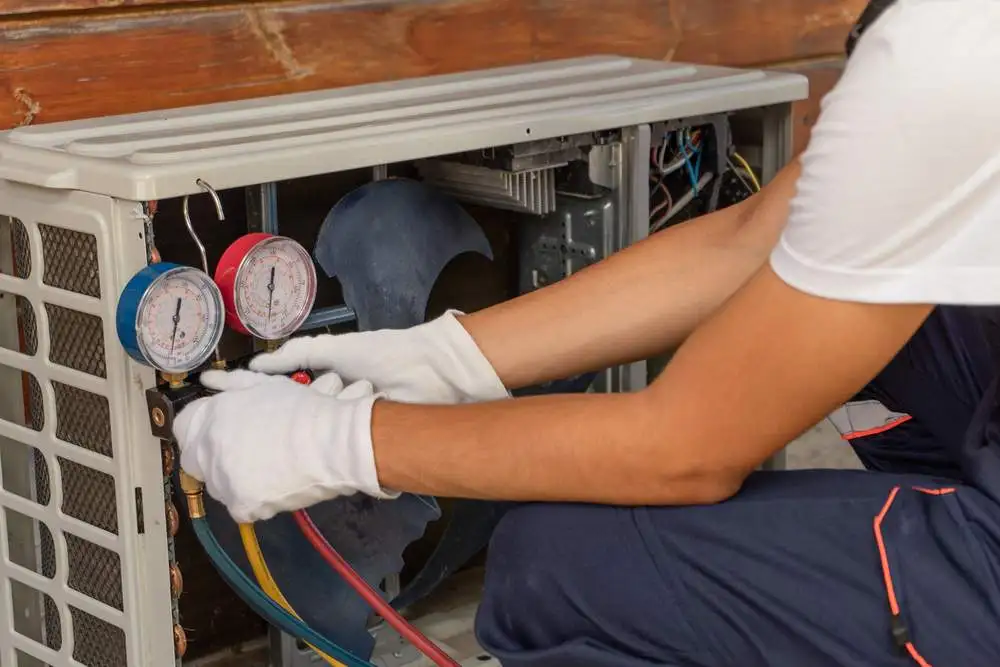
Suspect a refrigerant leak? Don’t let your AC compressor burn itself out trying to cool your home. Schedule an AC Diagnostic Repair with Howard Air & Plumbing today. We serve clients throughout the greater Phoenix Valley area, and our certified technicians will locate the leak, repair the copper line, and safely recharge your system. For more information, call us at 480-508-9866 or reach out to us online.
Image credit: Stock-Photo, Shutterstock
