Author: admin

  • Technologies That Are Changing the Face of the HVAC Industry

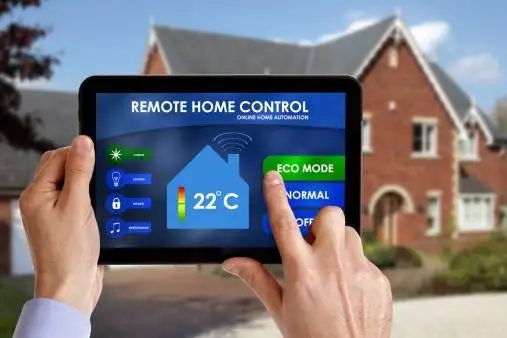
    Smart home control technology

    New technologies in the HVAC industry are making heating and cooling of homes more efficient than ever. Today, HVAC systems have the ability to communicate between the indoors and the outdoors, reducing heat loss and helping to maximize the dehumidifying process. These new technologies allow HVAC systems to run more quietly and makes them easier to program.

    Smartphone Technologies

    Many of the new changes are actually in the HVAC components and the systems’ controls, but a number of these new changes are in external technologies. So-called “Smart Homes” are becoming more and more commonplace as Smartphone capabilities continue to expand.

    These “smart” technologies allow users to control and monitor their homes or businesses from anywhere in the world, making changes to temperature settings and controls remotely.

    Technological Advancements

    These new technological advancements are made possible because interconnection is at an all-time high. The ability to communicate with our machines is becoming simpler every day.

    This means that utility bills are getting lower, the efficiency of heating and cooling systems is getting better, the strain on the environment is being reduced, and we are reaching a higher level of comfort.

    Learning Thermostats

    One of the primary recent advancements in the HVAC industry is the Learning Thermostat, which is almost a virtual assistant. It learns what temperatures you like and it automatically adjusts the room you are in to your settings. This Learning Thermostat turns itself off when you leave the room. It is controllable by Wi-Fi so you can warm up your bathroom before you take a shower each day (unless the Learning Thermostat has already figured out you like the bathroom warmer at that time of day) or cool off the house before you get home from work.

    The Learning Thermostat also has the ability to turn off during times of peak demand. This means you save money. With the Learning Thermostat, the process is completely automated.

    Self-Diagnosis

    The newer HVAC systems can also self-diagnose and even repair themselves, much like a computer does. It may seem that this type of technology would cause repair personnel to worry about their job security, but this is not the case. Technicians will still be needed to follow up on those reports and replace worn-out parts.

    Variable Refrigerant Flow

    Most of the energy loss in our homes comes from cooling or warming an entire house when only one room really needs the HVAC system to turn on. This can happen in homes that have shade on just one side, and sun on the other. With a variable flow, users can have heat in one part of the building and cooler air in a different part of the building while maintaining the utmost in efficiency.

    Howard Air & Plumbing

    At Howard Air & Plumbing, we know these are just some of the innovations that are changing the face of the HVAC industry and we are proud to stay on top of the latest technology for our customers. Please contact us today with any questions you have about your HVAC system.


  • Construction Boom Pushes HVAC Market to 7% CAGR Growth Through 2020

    Dynamic growth chart. Upward arrow breaking through the graph.

    Based on a recent study by ReportsnReports, the HVAC industry is expected to grow globally by nearly 7% compound annual growth rate (CAGR) between 2016 and 2020. A number of factors have led to this boost in demand for HVAC products and services for both residential and commercial applications, including industrialization efforts and a turn toward energy-efficient systems. 

    At the end of 2015, the Asia Pacific region held 51% of the HVAC market share. Looking forward to 2020, it is expected that this trend will continue, with China retaining its lead spot as a country with high demand for new construction HVAC and upgraded energy efficient models to replace older systems. 

    Growth Trends

    Currently, 67% of the HVAC market is made up of non-residential customers including schools, hospitals, manufacturing facilities and other commercial buildings. As industrialization continues to build around the world, this trend will continue as well. In fact, the industry as a whole is strongly leaning on a 69% market share of new equipment, rather than service. As smaller countries become industrialized and see considerable new construction across the board, this new equipment will be instrumental in getting their facilities operational. 

    Despite the heavy favoring of the commercial market sector, residential customers are also an important piece of the puzzle. Countries experiencing population booms will be headed toward urbanization, which will lead to a fair share of demand for residential system installations for housing projects in the near future.

    Green Technologies

    Another major influencing factor on HVAC and construction alike is a slew of new local and international guidelines for efficiency, working conditions and more. New equipment used to accurately monitor environmental conditions inside of manufacturing plants, offices and hospitals will be required to ensure the safety of workers and cut down on wasted energy. Likewise, green technologies will become an even greater part of HVAC implementation as top-producing countries look to reduce their carbon foot print and meet global standards for clean energy initiatives. 

    An interesting new take on home and office automation has also had an impact on the industry as a whole, which will likely become more apparent in coming years. More and more systems are being integrated with the so-called “Internet of Things,” which has opened up the door for better connectivity and control with less human interference. It is both a convenient and efficient strategy that some of the top HVAC companies are taking advantage of. Global leaders like LG, Bosch, AB Electrolux, Hitachi and more are working on engineering new technologies to keep up with changing demands worldwide that allow for better automation and hands-off management. In addition, these new automated systems can better track performance over time, find trends, and adjust themselves according to predicted conditions rather than waiting for an individual to manually reset or change the system settings. 

    Overall, the 7% growth of the HVAC industry over the course of the next five years is going to be largely dependent on new construction around the world, but will also have a steady place in countries that are already industrialized as more companies seek to join the green revolution. Meanwhile, as more countries become industrialized, there will be a demand for both commercial and residential products and services that can keep up with their expansion.

    Howard Air

    At Howard Air, we know it is important for us to keep up with global trends in our industry as it allows us to better serve our customers with the latest technologies. If you have any questions or concerns about your HVAC system, please contact us today! 

  • Air Conditioning Actually Makes Phoenix Hotter

    Air Conditioning Actually Makes Phoenix Hotter

    Updated Nov 21, 2021

    To say Phoenix, Arizona is “hot” is like saying rain is wet. If you’ve ever lived here or visited, you know that the “dry heat” argument holds little weight when it’s 115 degrees in the shade. But what might not be so obvious to natives is the fact that Phoenix air conditioning units actually make the city hotter.

    Learn the science behind this sweat-inducing Catch-22 and how to cool your home using less energy.

    How Air Conditioning Raises Outside Temperatures

    The excess heat emitted from the city’s collective air conditioning units actually increases nighttime temperatures as high as 2.7 degrees according to a study conducted by Arizona State University researchers in 2014. With the urbanization of Phoenix came more buildings, roads, and asphalt pavement – all of which can be attributed to the absorption and release of excess heat. When compared to less-developed cities with an abundance of trees and plant life – Phoenix temperatures are considerably hotter. Phoenicians themselves contribute to the heat simply by engaging in daily activities like driving.

    Further research shows that the growth of Phoenix as a large urban city has had a quantifiable effect on nighttime temperatures. Low temperatures never exceeded 90 degrees prior to 1970 whereas they emerged 50 times in a nine-year span beginning in 2000. Because of controllable factors from human activity to air conditioning, Phoenix has been referred to as an “urban heat island” due to higher temperatures in comparison to its geographical counterparts.

    7 Ways to Reduce the Heat Island Effect

    To lower the impact on the troposphere (and your energy bill) there are several practical changes you can implement into your daily life.

    1. Bike to Work

    Not only will you reduce your carbon footprint, but you’ll also get an awesome workout while saving on car maintenance and fuel costs.

    See also: 13 Reasons You Should Bike to Work

    2. Run Errands

    Literally: Don’t own a bike? Consider a brisk walk or light jog to run errands within a 1-2 mile radius of your home. Yes, it’s hot out, but if your Redbox movie return is just around the corner, is it really worth starting up the car?

    3. Install Dark Shades

    Keep your home cool and reduce the length of time your air conditioning unit runs by keeping dark, heat-efficient curtains, shutters, or shades are drawn. The same goes for the home’s exterior – install solar screens or window films that reflect heat.

    4. Plant a Tree

    While they may require future upkeep, large leafy trees around your home’s exterior can prevent scorching rays from shining upon your roof and windows.

    5. Time it Right

    Adjust the settings on your thermostat to 78 degrees when you’re home and higher when you’re gone or sleeping. Take advantage of automatic settings and you won’t think twice about being energy efficient.

    6. Go Old School

    If it’s bearable in late spring or early fall, consider using large fans to cool the home. For maximum efficiency, close the windows closest to the fan and open windows in adjacent rooms.

    7. Avoid cooking Midday

    To keep the house as cool as possible, avoid using the oven and stovetop if possible. Opt for summer-friendly dishes like cold salads and quick no-bake dinners. If you need to cook, use the exhaust fan.

    Keep Cool this Summer with Howard Air & Plumbing in Phoenix, AZ

    If you must use air conditioning in Phoenix (and trust us – we know you do!), at least make sure to keep up with routine maintenance. Address air conditioning problems as soon as possible to ensure the unit is always operating at maximum efficiency and not expending more energy than is necessary. For all your Phoenix air conditioning repair needs and preventative service requests, contact Howard Air & Plumbing at 623-201-5153.


  • Is Your Central Air Conditioning Unit Not Cooling Your Home?

    There are a variety of things that could cause your air conditioning unit to not cool your home properly. Some solutions to these problems can be done on your own, but others may require contacting professional help, like the friendly folks at Howard Air & Plumbing.

    In this article, we’ll categorize issues you can try to solve on your own and ones that should be handled by a professional.

    Do It Yourself Central Air Repairs

    Before calling in a locale air conditioning repairman, give these easy HVAC fixes a try.

    1. Turn it off, then back on again.

    Howard Air - Woman Turning Off AC Checking for Issues

    If your AC isn’t blowing cold air, it’s possible that the pipes may have frozen over, you have an electrical short, your thermostat may be set incorrectly, or your unit is shot and it’s time for a new one. Sometimes, turning off your AC unit, waiting about 30 minutes, then turning it back on can ensure the thermostat is set to the correct position, automatic schedules are reset, and if the pipes are frozen it will give them time to thaw.

    The fix: Set the thermostat to AUTO or verify the cooling schedule if your thermostat has one.

    2. Change the air filter

    Howard Air - Man Checking AC Filter for Issues

    If turning off the thermostat for a while helps, but the luke-warm air comes back after a short time, check your air filter. Having a clogged or dirty air filter puts a strain on the unit and can cause the evaporator coil to freeze (literally) which prevents air flow.

    The fix: Check your air filters and change them regularly.

    3. Check the condenser outside

    Howard Air - Check AC Condenser for Issues

    Most AC units have a condenser located outdoors to transfer the heat outside. If the condenser is dirty, the fins are bent, or if something is blocking the unit, it won’t be able to dissipate the heat properly.

    The fix: Remove any debris that may be blocking the condenser. Lightly spray the outside unit with a garden hose, but be careful not to bend the fins inside the condenser.

    When to Call in a Professional

    Sometimes, the trouble with your AC unit should be resolved with the help of a professional. A few examples of these types of problems include:

    1. Fan motor failure

    If the fan motor has stopped working, the condenser isn’t able to dissipate heat and prevents the AC from cooling your home.

    2. Low refrigerant or leak

    AC refrigerant is what absorbs the heat from the air. If your AC unit is low on refrigerant, it means there is a leak and it can’t absorb enough heat to cool the air. If you notice ice buildup on the refrigerant line or the outside unit, or you hear a bubbling or hissing noise, or if your AC doesn’t cool the home on hot days but works fine at night, these are signs of a refrigerant leak.

    3. A failed compressor

    A compressor is the “heart” of an air conditioner, circulating refrigerant between the evaporator inside and the condenser outside. If there is an issue with the compressor, it may need to be replaced.

    HVAC Preventive Maintenance

    Howard Air - Preventive HVAC Maintenance Infographic

    Howard Air & Plumbing

    If you are not able to resolve the trouble with your AC unit on your own, we highly recommend contacting us at Howard Air & Plumbing to assist you with resolving your trouble. Our professional technicians have years of experience and are ready to assist you. Click here to contact us or call (623) 201-5153 to speak directly with a representative.

  • How Technology is Advancing In-Home Comfort

    How Technology is Advancing In-Home Comfort

    Updated Nov 19, 2021

    HVAC Technology

    With the great progress of today’s technology, in-home comfort is advancing to new levels. With technological improvements of home appliances and systems such as heating and air conditioning units, a higher level of comfort is becoming the norm.

    As these new types of systems become more and more advanced, homeowners can often customize their own standards. From programmable heating and air conditioning systems to room-scanning sensors, technology is helping to advance in-home comfort.

    Programmable Thermostats

    The easiest way to control the comfort level inside your home is with a programmable thermostat. More advanced than just the “auto” mode on old thermostats, new programmable thermostats work to “learn” your comfort levels and “remember” your program settings. Cool features like Wi-Fi connectivity allow you to control the temperature of your home from anywhere in the world. Going on sudden travel and can’t stop home to adjust the thermostat? Lower the temperature of your home right from your mobile device.

    I-See Sensor

    Customize your “perfect” level of hot and cold in your home with an advanced hot/cold-analyzing sensor. New sensors like the i-See sensor scan the rooms in your home using 3D technology and determine the location of hot and cold spots depending on the size of the room and who is in them. Using airflow controls, these sensors can help to deliver that “perfect” amount of heating or cooling for each area of your home.

    Clean Air Solutions

    When you think of in-home comfort, usually temperature is the first thing to come to mind, but what about air quality? With so much pollution in our cities, it is more important than ever to choose a heating and air conditioning system that delivers the best possible clean air solutions. New clean air technologies help to eliminate odors, dust, pollen, and bacteria from the air in your home. Fitting right into your current heating and air conditioning systems, these clean air solutions can be the upgrade you need to maximize your home air quality.

    This is just a small sample of different types of heating and air conditioning technological advances. Each year, our world is becoming more mobile and centered on “instantaneous results.” Providing highly advanced in-home comfort that is controllable from anywhere is one way that the HVAC world is developing for new generations to come. At Howard Air & Plumbing, we are focused on creating comfort in your home. Contact us online for all your home air conditioning and heating needs, or call us at (623) 201-5153.

  • Choosing the Right Contractor for your Heating and Air Conditioning Needs

    hvac contractor

    Tips for Hiring the Right Contractor

    Choosing the right contractor for your home heating and air conditioning needs can seem complicated, but it doesn’t have to be. We have put together a list of tips that will help you hire the right heating and cooling contractor for your home:

    Do your homework

    First, make sure that you find out what the licensing and insurance requirements are for contractors in your state. Before you call a contractor, look at the model of your current air conditioning system. Make sure you can tell the contractor the exact model and then give them your system’s maintenance information and history.

    Ask around for referrals 

    To find a contractor that others have had success with, ask around. Ask your friends, neighbors and colleagues for referrals. Also make sure to check with the Better Business Bureau and online organizations such as Angie’s List. 

    Call the contractor’s references 

    When you contact a contractor, ask for references, and then call those references. Ask about the contractor’s performance, and find out whether or not the job was completed on time and within budget.

    Ask about special offers 

    A heating and cooling system is a big purchase, and one of the most expensive you will make as a homeowner. To keep costs down, ask about available rebates (and check Google). Typically, ENERGY STAR rebates are often available. 

    Look for ENERGY STAR 

    Speaking of ENERGY STAR, not only do they offer rebates, but ENERGY STAR products also meet the energy efficient guidelines as set up the Environmental Protection Agency. These air conditioning and heating systems offer you long-term savings.

    Get a home evaluation 

    The contractor you choose should give you a thorough home inspection. This is to assess your home’s needs. Your contractor should only size a heating and cooling system based upon the size of your home and the level of insulation your home has. 

    Get a written estimate 

    Ask for a written, itemized estimate when you compare contractors’ bids. Make sure that you compare warranties as well as costs, and find out if the systems are energy efficient. Just because a price is low, it doesn’t mean it’s the best deal  if it is not energy efficient.

    Written proposal

    When you do decide upon a contractor, make sure you get a signed, written proposal before the work begins. Get the contractor to specify costs, model numbers and the warranty as well as the job schedule.

    Howard Air

    With decades of experience in the Valley of the Sun, we are ready to help you with all your heating and air conditioning needs. Are you ready to get an estimate? Please contact Howard Air today!

  • How to Prepare Your HVAC System for the Phoenix Winter

    Desert and Cactus in the Snow

    Here in the Valley of the Sun, we probably spend more time playing outdoors than we do worrying about what winter may bring. Our winters are brief, to be sure, but some of our lows can be quite chilly. With an average of just under 300 sunny days per year, it might not seem as though much thought need be given to heating our homes, but when the desert temps drop below 50 degrees, residents in and around Phoenix scramble to turn on the heat.

    Home heating systems don’t get the same amount of use in southern Arizona as in many other areas of the country, but when you need your HVAC system to keep your home warm and comfortable on a cold desert night, you want a system you can rely on. Although it may seem like Phoenix is the place of endless summers, properly preparing your HVAC system to handle winter’s chilly temperatures can save you money in costly repairs.

    At Howard Air, we believe in being prepared. Homeowners in and around greater Phoenix have trusted Howard Air with their home comfort for more than 30 years. When you need HVAC maintenance, service, or replacement, count on Howard Air.

    Preparing Your Home for Winter

    Here are some important steps to take to prepare your HVAC system for the Phoenix winter.

    Replace Your Filters 

    Know your HVAC system manufacturer’s recommendation for filter changes and replace filters accordingly. Dust and dirt can clog your filter, making it difficult for the air to circulate. Your furnace needs to work harder to maintain a comfortable temperature, and the components can wear out sooner than they should. A new filter not only improves your indoor air quality, but your HVAC system’s performance will improve as well.

    Check Your Thermostat

    Older thermostats can lose their accuracy over time, causing your HVAC system to work overtime. A faulty thermostat can cycle on and off repeatedly, driving up utility costs and taxing your home’s heating system. If you suspect a faulty thermostat, or your thermostat has seen better days, consider updating to one of the newer, digital models. Go with a programmable thermostat for even better energy savings.

    Examine Vents 

    It may seem obvious, but check your vents to make sure nothing is blocking the air flow. Vacuum both intake and out-flow vents for maximum efficiency. Should you notice a lack of airflow coming from your out-flow vents, and there is no obvious blockage, contact the professionals at Howard Air right away. You may need professional service to unclog your ductwork.

    Schedule Professional Maintenance

    The key to a healthy and reliable HVAC system is maintenance. Just like routine maintenance keeps your car running at its best, maintaining your home heating system ensures that you and your family will stay comfortable all winter. Professional maintenance can also alert you to small problems before they become large-and costly-issues. 

    With Howard Air’s professional maintenance, not only will you have the peace of mind that comes from knowing your home will weather the chilly Phoenix winter temperatures, but you’ll also have the confidence of our NO Breakdown Guarantee. We’re so sure of our maintenance and repairs that should your system fail to keep you and your family comfortable this winter, we’ll make the necessary repairs free of charge.

    Make sure your home heating system is prepared for winter weather, no matter how short the season. Contact Howard Air for a thorough inspection and maintenance service today. Winter can get cold, even in the Valley of the Sun.

  • Should I Get a Second Opinion on AC Repairs?

    Should I Get a Second Opinion on AC Repairs?


    It’s always a good idea to get a second opinion on major home repairs, especially air conditioning repairs. At Howard Air, we believe that AC repairs should only be made when necessary. We do not insist on costly repairs when you don’t need them. We are available for a second opinion on any quote you may have from other companies. We also invite you to seek a second opinion on our recommendations.

    Howard Air has served the Valley of the Sun for more than 30 years and we always present our valued customers with an honest estimate of AC repairs and service costs.

    Routine maintenance

    Air conditioning is fundamental in homes, condos, commercial buildings and apartments in the Phoenix area. Heating is used occasionally during the winter when the temperature drops and heating systems should be checked before cooler weather blows in. 

    Your air conditioner is used most of the year, which causes wear on the system. You can help keep your AC in good condition by changing the filters regularly. Your AC system will work more efficiently if all spaces around ducts and vents are kept clean. Dust and vacuum these areas frequently, especially after major wind storms. Keep attic and basement areas clean so they don’t attract dirt, insects and other pests. It is always a good idea to inspect air ducts to check for any cracks or leaks.

    Keep your home sealed tightly with weather stripping to hold in the cooled air and keep out dust and sand particles. 

    Professional maintenance

    Our preventive maintenance program is based on the Energy Star-recommended checklist for air conditioners and heating systems. This includes:

    • Tightening electrical connections
    • Checking ducts for leaks
    • Checking thermostat and controls
    • Lubricating moving parts
    • Inspecting the condensate drain
    • Cleaning and adjusting the blower system
    • Cleaning condenser and evaporator coils
    • Checking refrigerant levels

    We inform you of any necessary AC repairs and give you a cost estimate. Major repairs can often be avoided with regular maintenance.

    Energy audit

    Howard Air will also conduct a home energy audit to help you save money. This includes diagnostic testing with infra red imaging and a visual assessment. We conduct a blower door test to see if areas of your home are leaking air.

    Making your home energy efficient may be as simple as putting in new weather stripping or fixing a crack in the ceiling or attic. Our objective is to help home and commercial building owners save on their cooling and heating costs.

    Energy Star recommends replacing air conditioners over 10 years old, especially if they require constant repairs. We agree with this recommendation, especially if your HVAC system is giving you problems. We will not attempt to sell you something you don’t need.

    Contact us for a second opinion if you have a quote from another company regarding AC repairs or heating system problems. Our technicians are NATE certified. They are experienced in working with all major brands of HVAC systems and we are completely confident that we can give you the trustworthy service you deserve.

  • New Federal Study Quantifies Efficiency Losses Due To Improper HVAC Installation​

    New Federal Study Quantifies Efficiency Losses Due To Improper HVAC Installation​

    ACCA, the nation’s largest association of indoor environmental systems professionals, announces the availability of a new report, which confirms that HVAC equipment requires a quality installation (QI) in order to perform at rated efficiency. The research, undertaken by the U.S. Department of Commerce’s National Institute of Standards and Technology (NIST), found that substantial equipment efficiency is lost due to design and installation deficiencies. The NIST report presents faulty practices commonly-performed by contractors and details the resultant additional energy consumption.

    The recently-published report is the culmination of a three-year study that included the impact of building effects, equipment effects, and climate effects on HVAC equipment efficiency. The study found that installation faults significantly increase annual energy consumption. Extensive laboratory testing and computer simulations indicated that the following installation faults have the most potential to significantly degrade equipment efficiency: duct leakage, refrigerant undercharge/overcharge, low indoor airflow, and oversized equipment with undersized ductwork. Furthermore, the report shows that when two or more simultaneous faults occur, the efficiency degradations can be additive, compounding the increased consumption.

    “This report quantifies what many industry experts already know – profound efficiency losses occur when HVAC equipment is not installed properly,” says Paul Stalknecht, ACCA president and CEO. “This report should help consumers understand why it is important to hire a contractor who follows the QI Standard. When consumers start asking for QI from every contractor, it will raise the performance bar in the industry, and result in significant energy savings while increasing occupant comfort.”

    Quality installation (QI) is more than just using high-efficiency products and systems. The correct design, proper installation, and field measurements directly influence the customer’s comfort and how much is paid on utility bills. The ANSI/ACCA 5 QI Standard (HVAC Quality Installation Specification; www.acca.org/quality) specifies what to measure, how to measure, and the measurement tolerances for unitary residential and commercial HVAC systems. This reduces faults associated with design, installation, and commissioning. Failure to meet the design and installation elements specified in the ACCA 5 QI Standard will impact equipment performance and undercut the deemed energy savings assumed by many energy efficiency programs.

    A full copy of the NIST report, entitled Sensitivity Analysis of Installation Faults on Heat Pump Performance (September 2014), can be downloaded at no charge from www.acca.org/standards/quality/.

    ACCA is a non-profit association serving more than 60,000 professionals and 4,000 businesses in the indoor environmental and energy services community. Founded more than 40 years ago, today ACCA sets the standards for quality comfort systems, provides leading-edge education for contractors and their employees, and fights for the interests of professional contractors in every state in the country. Learn more about ACCA here.

  • Hail and Storm Damage to your A/C?

    Haildamage

    Friday, October 22nd, 2010

    by Travis Howard, published October 2010

    The condenser coil and sometimes referred to as the outdoor coil releases heat to the outdoor air that it has removed from the home.  For heat pumps in the heating season, the coil picks up heat from the outdoor air and transfers it to the home.  This is performed by pulling air through the coil.

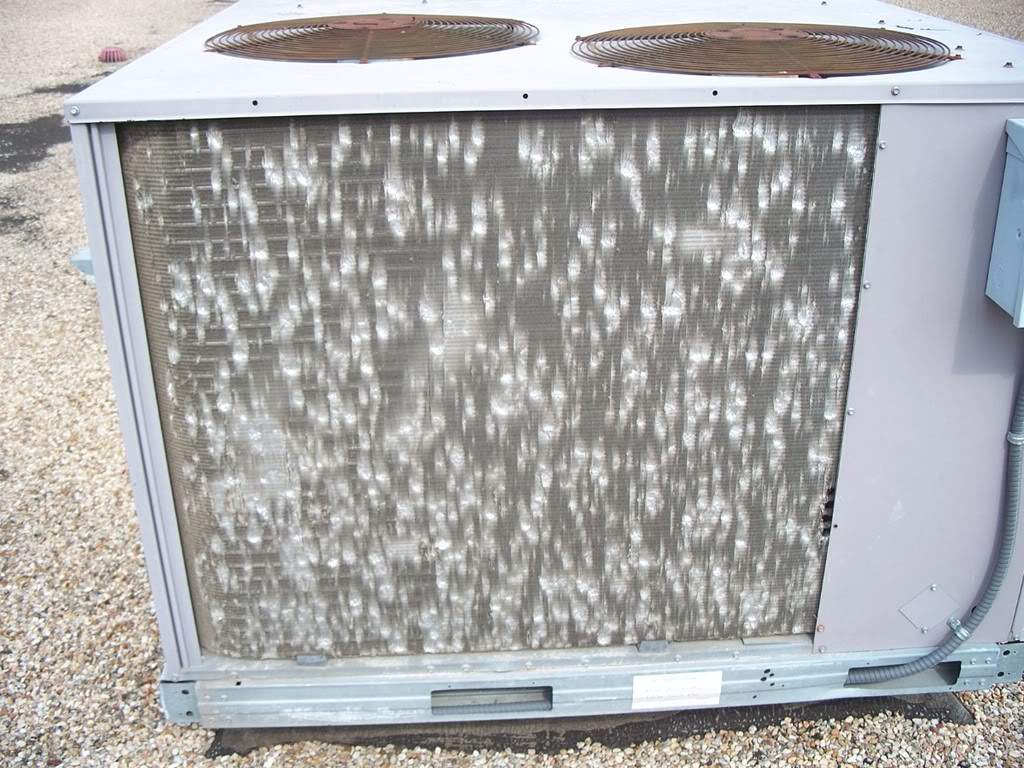
    Coil fins that are struck by hail or other objects are bent and damaged reducing and changing the airflow.  This airflow reduction and change inhibits the ability to transfer heat from the house to the outdoor air.  This not only raises your energy consumption and reduces efficiency it shortens the life of the unit.

    Insurances companies have been telling homeowners to have the coil fins combed out to straighten them.  I have been reading some testing agencies reports regarding hail damage effects on air conditioner performance.  While the opinions and findings vary not one agency would commit to stating that an air conditioner can be returned to 100% performance, capacity and efficiency.  The equipment will never have the same cooling, efficiency and life expectancy it had before the damage occurred.

    For some equipment, manufacture warranty can still be in effect.  Manufacturers will not warranty a failed component, such as a compressor, if any possibility exist that it failed due to a damaged coil that was not returned to original manufactures specifications.

    Combing out damaged condenser coil fins on equipment under manufacture warranty is not recommended.  The minimum acceptable restoration is complete coil replacement.  Combing out damaged condenser coil fins on equipment, not under manufacture warranty, could be performed with the understanding that the equipment capacity, performance, efficiency  and remaining life expectancy have been compromised.

    During my research, I came across an article by Dan Jape of Reliable Heating and Air, in which he said, “This would be similar to your insurance company telling you to beat out the damaged fender in your car with a hammer after a wreck and insisting you be happy with the results”.

    Hail damaged air conditioners and heat pumps need to be looked at, not as a cosmetic problem, but rather as a long-term performance and capacity problem.  Insist that your insurance company replace your equipment or fix it with a manufactures coil.


    Travis Howard

    Assistant Service Manager

    602-953-2766

    [email protected]

    www.howardair.com