Author: admin

  • What is a Furnace Tune-Up & Why You Should Get One

    What is a Furnace Tune-Up & Why You Should Get One

    Updated Feb 26, 2025

    A furnace tune-up focuses on optimizing the efficiency and performance of your HVAC system. You can schedule regular or seasonal tune-ups. Regular tune-ups ensure the system runs smoothly all year round, while seasonal tune-ups prepare it for changing weather. Schedule a seasonal tune-up to prepare for winter and enhance indoor comfort during the cold season.

    But what is a furnace tune up, and what does it include? Here, we look at what to expect during a furnace tune-up and the estimated cost of fine-tuning your heating system.

    What Does a Furnace Tune Up include?

    You may have replaced furnace air filters and know what it entails. However, a tune-up service could be entirely new to you, and you may want to know what to expect when you schedule one. Here are the services included in a furnace tune-up;

    Inspection and Adjustment

    A technician inspects, cleans, and adjusts the furnace burner, heat exchanger, pilot light, and gas pressure to ensure everything works as expected. This inspection also covers the flame sensor.

    Furnace Cleaning

    A furnace technician cleans various HVAC system components to remove dust and small debris. If left uncleaned, dust particles and small debris may impact furnace performance and increase energy consumption.

    Lubrication

    Technicians inspect and lubricate motor bearings and other moving parts. Lubrication ensures moving parts run smoothly, enhancing system efficiency.

    Calibrating Settings

    The tune-up service also covers calibration of the thermostat settings for accurate temperature control.

    Cleaning and Air Filter Replacement

    The technician inspects and cleans the air filter or replaces it to enhance indoor air quality.

    Duct Inspection and Cleaning

    Duct connections are inspected and cleaned to ensure proper airflow throughout your home.

    Safety Inspection

    The technicians inspect the system for carbon monoxide leaks and other safety controls.

    Resolve Major Issues

    Technicians resolve any identified or potential problem with the heating system to mitigate the risk of emergency repairs. They also answer your questions about the heating system.

    Common Questions About Furnace Tune Ups

    The following frequently asked questions about furnace tune-up will give you a better understanding of the service.

    How Long Does a Furnace Tune Up Take?

    A furnace tune-up takes about one to two hours. However, tune-up services may take longer, depending on the furnace’s condition and age.

    How Much is a Furnace Tune Up Typically?

    A furnace tune-up costs between $70 and $200, depending on the model and the services needed to keep it running optimally.

    Is a Furnace Tune Up Necessary?

    A furnace tune-up is necessary to keep it running smoothly and efficiently. It has numerous benefits, including reducing energy bills and keeping your family safe.

    Why Get a Furnace Tune Up?

    Here are more reasons to schedule regular furnace tune-ups.

    Lower Energy Costs

    Tune-ups ensure your system runs efficiently. An efficient furnace consumes less energy to heat your home, reducing energy costs.

    Enhance Home Comfort

    Regular furnace tune-ups optimize performance and reduce the risk of sudden breakdowns, enhancing home comfort throughout the cold season.

    Keep Your Warranty

    Some manufacturers require regular professional tune-ups to maintain system warranty.

    Dangerous Gas Detection

    System malfunctions may lead to carbon monoxide leaks and other safety hazards. Regular tune-ups detect and prevent dangerous gas leaks and other hazards, keeping your family safe.

    Get a Professional Furnace Tune Up from Howard Air & Plumbing

    While you can change air filters or perform other minor maintenance services, your furnace needs more than that to perform efficiently. It requires a professional tune up, especially before transitioning from the warm to cold seasons. But what is a furnace tune up? Professional tune-ups by Howard Air & Plumbing technicians optimize furnace efficiency and performance, allowing you to keep your home warm during the cold season. Contact us today to schedule a furnace tune up and enhance indoor comfort.


    Image Credit: InFocus.ee, Shutterstock

  • What is the Most Energy-Efficient Air Conditioner?

    What is the Most Energy-Efficient Air Conditioner?

    What is the Most Energy-Efficient Air Conditioner?

    With a sizable initial price tag and an average expected lifespan of around 15 years, purchasing a new air conditioner is an investment in your home’s future comfort. With a bit of research, it can be an investment in lower energy bills and “greener,” more efficient operations within your home as well. 

    In recent years, energy-efficient air conditioners have become a must-have for modern homes, especially those running on outdated and clunky HVAC systems. However, with so many options and so many variables to consider, shopping for the right air conditioner can feel like a daunting task for many home and business owners. 

    Fortunately, there are a few steps you can take to make the process easier and to ensure you’re getting the air conditioner you need for your home’s unique needs.

    Choose the Right Air Conditioner Size for Your Home

    One of the most common places where people go wrong when buying air conditioners is purchasing a unit that’s either too large or too small for their home. Because units aren’t exactly marked with effective square footage labels, it’s an understandable and easy mistake, especially for those new to shopping for ACs. However, getting the size right is crucial, especially if you want an efficient air conditioner in the years to come.

    Having a unit that’s too small for your home means that the air conditioner will struggle to keep your home’s interior cool. This means it’s likely running too frequently, which wastes energy and puts undue strain on the AC itself. Meanwhile, having an air conditioner that’s too large causes short cycling, and uses too much energy to create an unnecessary amount of cool air for your home. Striking a balance is a must.

    Fortunately, there are resources available for those looking to find the right size. Energy Star charts and calculation guides are available online. Even better yet, you may have the option of reaching out to local AC repair professionals, who can inspect your home and give you a precise recommendation for air conditioner sizing. 

    SEER2 and EER Scores

    When you take a peek at the Energy Star tag on any AC unit, you’re likely to spy SEER2 and EER scores among the list of information there. These figures are crucial when it comes to picking efficient air conditioners. 

    SEER2 stands for “seasonal energy efficiency rating” and measures the efficiency of a particular model throughout seasonal changes and the many variables that come with those transitions. EER stands for “energy efficiency rating” and provides a broader overview of the efficiency of air conditioners. 

    The higher these scores, the more efficient your air conditioning experience will be. Most newer models have a minimum rating of 13, but it’s still beneficial to invest in air conditioning units with higher SEER2 ratings in most cases.

    Consider Energy Star Certified Models

    Not all air conditioners receive Energy Star certification. These rewards are given to air conditioning units that have proven to meet or exceed efficiency standards compared to similar models. 

    Generally, those that are certified can be easily identified by a blue sticker on the unit’s information. While there are certainly efficient units that do not bear the blue sticker of certification, this is always a good place to start if efficiency is one of your top concerns when shopping and helps to seriously narrow down your options.

    Customizable Settings

    Many air conditioners come with customizable settings that allow you to lower your energy use manually. Units with an “energy saver” setting are excellent options. When this setting is turned on, both the compressor and fan turn off once your home is cooled, which can lower the cost of your monthly energy bills over time.

    Programmable temperature settings are also must-haves if you’re serious about getting the best possible efficiency out of your air conditioner. A unit that works with a programmable thermostat allows you to create a custom cooling schedule that keeps your home cool and comfortable when your family is home but keeps operations at a minimum to save energy when the house is empty. This is a simple upgrade, but one that can save you a lot of cash when it comes to your energy costs.

    Installing a smart AC unit is yet another way to more closely control your AC’s overall efficiency. Smart ACs can be found in all shapes and sizes, including split unit, portable, window, ductless and more. For a full central AC unit, a smart thermostat can be installed to get the job done.

    Consult the Professionals

    With so much information available online about choosing an AC unit, it can be easy to narrow down your list of energy-efficient air conditioners on your own. However, consulting the professionals before making your final purchase will give you the peace of mind you deserve when making such a significant and impactful purchase. Whether you’ve got your eye on window units or the biggest central AC unit with the highest SEER2 rating, an expert can steer you in the right direction to find the perfect model for your home and your budget.

    Contact Howard Air & Plumbing

    Whether you’re just starting your search for an energy-efficient air conditioner or you’ve already narrowed your list down to two or three options, the professionals at Howard Air & Plumbing are here to ensure you’re on the right track. 

    Contact us today to learn more about choosing an efficient AC unit for your home and how we can help you get the most out of your energy-efficient AC system in the coming years. 

    Featured Image: Rawf8/Shutterstock
  • Air Conditioning Repair Troubleshooting

    Air Conditioning Repair Troubleshooting

    Updated Nov 20, 2021

    AC Repair Troubleshooting Tips For Summer

    As the weather warms up, it’s time for homeowners across the nation to start preparing their air conditioning units to get them ready for the coming heatwaves. Unfortunately, many homeowners are disappointed to find that their AC units are not functioning properly after the long winter months. There are a few simple steps you can take to troubleshoot your air conditioning unit before you call for the repairman.

    1. Check for Power

    Due to the high power draw of most air conditioning units, they are typically protected by several fuses and breakers to cut them off in case of an emergency. If the unit will not power on, check your breaker box and the fuse panel to determine if either of these has been tripped since the last time the unit was operated.

    2. Check the Fan

    If there is no problem with the power, or if a breaker continues to trip over and over after you have reset it, it is time to take a look at the actual air conditioner to determine what is causing the problem. If the fan is not kicking on at all, it can be a sign that the thermostat is not properly functioning, or it could be that there is damage to the control unit inside the box. These types of repairs are best handled by a professional AC company such as Howard Air & Plumbing.

    3. Check the Pump

    Air conditioning units use pumps to get rid of condensation that builds up inside the case. If too much water collects internally, an overflow valve will shut the unit down to prevent damage. Check to see if the pump is running or if there is sitting water inside the unit.

    4. Check the Temperature Drop

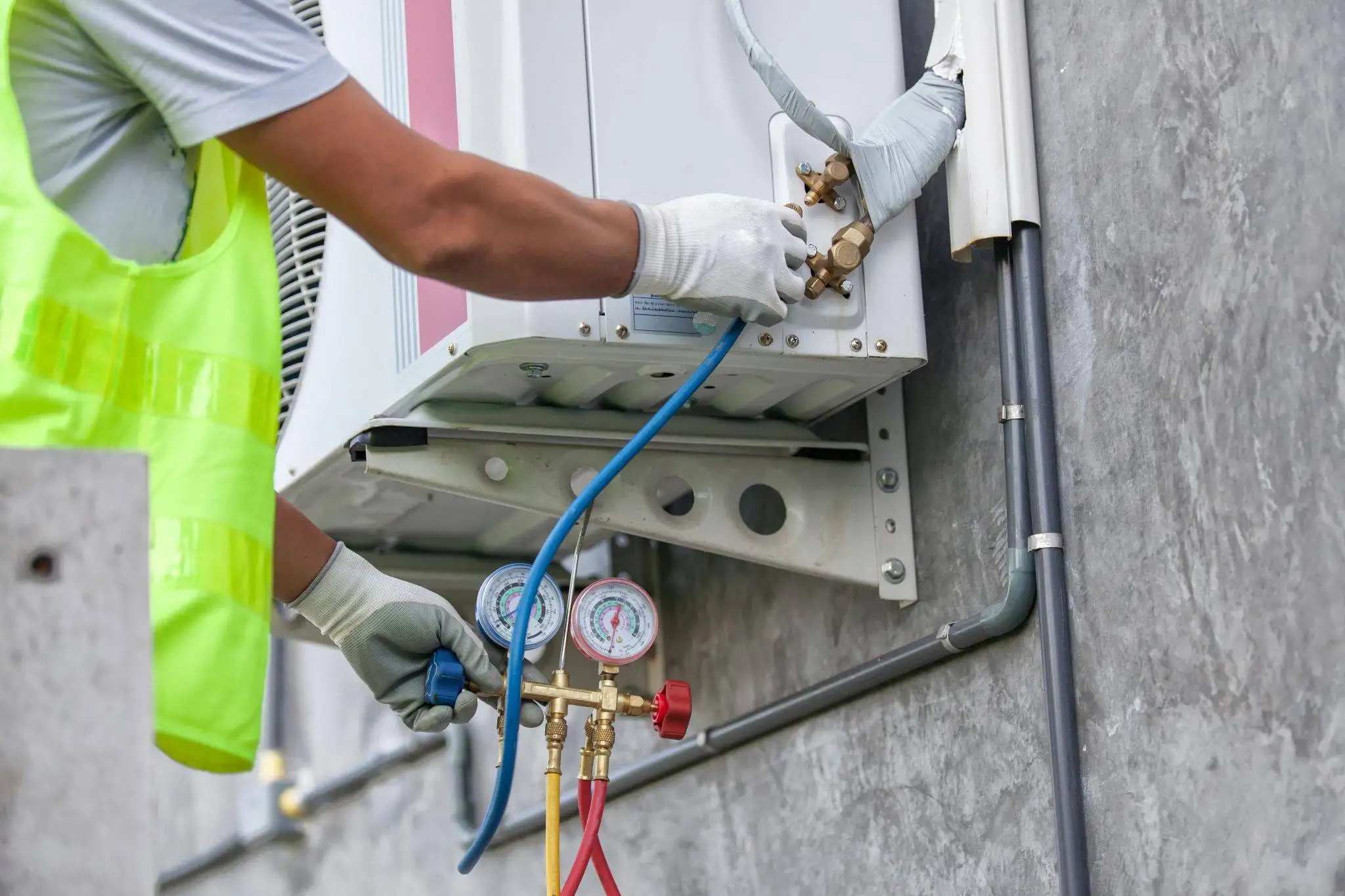
    If all of the components of the unit appear to be working normally, but you are still not seeing results, it may be an issue with the refrigerant. Just like a car’s cooling system, your AC unit may need to be recharged for the best cooling results. This is typically not a job that can be done by yourself, so a professional will need to come out and make sure the correct refrigerant and pressure are used to restore the unit to full functionality.

    With these four steps, most homeowners will be able to determine whether or not their air conditioner needs repairs. The simplest step is always checking to make sure there is power getting to the unit. From there, isolating individual components that are not working properly will help narrow down the issue.

    In most cases, anything more involved than a breaker or fuse will require the attention of a trained professional who has the tools and knowledge necessary to make a repair.

    Contact Howard Air & Plumbing in Phoenix, AZ Today!

    Howard Air & Plumbing provides air conditioning troubleshooting and repair services in the Phoenix, AZ area. Our experienced team is dedicated to providing fast and reliable service, with a focus on same-day problem-solving. We carry parts from most major manufacturers in stock to get your unit back up and running before you have to suffer through another day of high temperatures.


  • Checklist for Buying a New HVAC System

    Checklist for Buying a New HVAC System

    Updated Dec 16, 2021


    Installing a new HVAC system is an exciting time. Whether you’re building a new home or you need a new way to beat the Arizona heat this summer, discover how a premier HVAC company can offer you the best deals on HVAC systems on the market. Shop for air conditioners and furnaces today using this easy checklist.


    1. Select the Right Size

    When it comes to installing an HVAC system, you need to be sure you choose the correct unit. While a scorching summer in Phoenix may call for some serious air conditioning, choosing a larger unit may not give you improved performance. A large air conditioner isn’t as efficient as a smaller model. Select a furnace-based model on the BTUs it provides, and an air conditioner based on its CFM, or cubic feet per minute, output. With the right system, you’ll enjoy comfortable temperatures and affordable utility bills.


    2. Shop by SEER Rating

    The next essential factor to consider is energy efficiency. Your central air conditioner is rated using a SEER2 rating, or Seasonal Energy Efficient Ratio. This gives you a good idea of the most energy-efficient air conditioning options available. Ask a professional for the ideal SEER rating for your particular needs.

    Typically, smaller units have a higher SEER2. However, advances in technology have allowed even large units to be surprisingly energy efficient. Shop around and compare the cost with the SEER2 rating of your favorite models to balance your initial investment with your overall operating costs.


    3. Consider Maintenance Steps

    A new HVAC system is going to eventually require maintenance. Whether you’re a regular handyman or not, you want a hassle-free system that works hard every day. Select an HVAC upgrade that has an extended warranty and a convenient maintenance schedule. You’ll need to replace your air filter every 30 to 60 days, so look for units that have conveniently located filters that are easy to remove.

    Select a system that offers you the best air quality with the most affordable air filter. Depending on your system, your air conditioner could be either filtering your air and improving your indoor air quality or blowing dust and pollen throughout your home. Base your decision on your desired level of air quality and filtration.


    4. Compare Noise Levels

    Most air conditioners and furnaces come with a noise level rating. Depending on the location of these HVAC systems, you’ll want a low noise level to ensure a comfortable home. Ask about the noise level of your particular air conditioner and look for ways to reduce the noise or choose a quieter option.


    5. Choose an Affordable Option

    Of course, no one wants to pay more for an HVAC system. Thankfully, some budget-friendly options can still be energy-efficient, quiet, and easy to maintain. Ask your professional HVAC installer about affordable options that always keep your home comfortable this year. Whether you’re looking for a brand-new system or need to replace your damaged air conditioner, find ways to save money.


    Work With a Quality Professional: Contact Howard Air & Plumbing Today

    Finally, one of the most important items on your checklist is to choose a quality, reliable installation team. When you work with an experienced professional, you have access to a wealth of information. Reliable and affordable installation can also assist you in your maintenance schedule and finding an affordable HVAC system. Let us help you find the best solution for your heating and cooling needs.

    From minor repair work to a major installation project, find out how a quality technician in your area can help. Contact Howard Air & Plumbing today and learn how to receive the maintenance you need or enjoy the quality of Phoenix HVAC installation services. We can help you save money and enjoy comfortable climate control this year.


  • Home Air Conditioning Zoning Advantages and Alternatives

    Home Air Conditioning Zoning Advantages and Alternatives

    Air conditioning zoning is an HVAC feature

    that gives you the power to adjust the temperature in your house by area. Each separate “zone” has its own thermostat, allowing you complete control of the temperature in your household. It helps cool off areas that might otherwise get neglected by the house-wide A/C and saves energy. Read on for more information on how zoning works, the benefits, and the alternatives.


    How Does HVAC Zoning Work?

    HVAC zoning requires multiple thermostats in the house to control different areas. Homes can be zoned by room or by floor. New A/C systems in Phoenix and elsewhere are more likely to include zoning, but older systems can easily be turned into zoned systems.

    Each thermostat is either wired or connects electronically to a control panel. The thermostats track the temperature in each area and send a signal to turn on heating or cooling capabilities to reach the desired temperature when the air is cooler or hotter than the thermostat setting. Dampers set up in your ductwork help direct the air, sending it to certain areas and blocking it from others. That signal opens up the dampers, letting air flow freely into a room to maintain a constant temperature.


    Advantages to A/C Zoning

    Phoenix A/C service is vital, especially in the summer. Around the time of the year, temperatures start to rise, you want to be sure that all occupied rooms are getting kept sufficiently cool. With zoning, you can keep occupied rooms cool without wasting energy on empty areas.

    In many homes, certain areas tend to run hot. Rooms that face the sun all day or have large windows might end up several degrees hotter than the rest of the house. Zoning can help you deal with this problem without leaving other rooms too cold for comfort. You can include the affected rooms into one zone, so they get more cool air than other rooms that don’t need as much cooling.

    Another benefit is that air doesn’t travel as far around your home, which actually improves the overall air quality. With traditional air conditioning, air circulates throughout the house. The downside to that kind of circulation is that it is easier for dust, pollen, and other allergens to travel throughout the house. Zoning helps keep those airborne particles mostly in the same area, making them easier to clean or filter out.

    Home AC Zoning


    Alternatives to Zoning

    Zoning is one of the most effective ways to deal with a home that heats up unevenly, leaving some rooms cold and others hot. If zoning doesn’t appeal to you, there are alternative options that include:

    • Mini-split air conditioners
    • Portable air conditioners
    • Window unit air conditioners

    Mini-split air conditioners are compact A/C systems that can be routed to multiple rooms. Some have as many as five zones available. These are smaller than traditional A/C systems but are not portable.

    Portable air conditioners have the advantage of easy installation. They include a window kit that sits inside the window. The kit does not extend out from the window, which is helpful if your home has regulations against window units. Portable A/C can also be moved easily from room to room, so you can transport it as needed. They tend to use a higher amount of energy than other cooling options.

    Window unit air conditioners are stored outside the window. Their cooling power is rated by BTU
    , with higher numbers indicating more cooling power. If you are installing one in a large room, look for a higher BTU number.

    Home zoning can help you save on your energy bills, cool off rooms that run hot, and improve air quality. Contact Howard Air & Plumbing for Phoenix A/C service, installation, and repair from expert technicians. We offer 24-hour emergency service to meet urgent air conditioning needs.

  • How to Troubleshoot Air Conditioner Problems

    Troubleshooting Air Conditioner Problems

    Every homeowner is likely to experience problems with their home’s air conditioner from time to time. When the blower stops working or you’re only getting warm air from the vents during those sweltering summer months. It’s always a relief to know you have a dedicated team of AC repair professionals in the Phoenix valley area on your side, but sometimes your air conditioner might need a simple touch you can do yourself. While it’s never recommended to undergo major AC repair on your own, there are a few common AC problems that any homeowner may be able to repair with a little time and the simplest of tools. Troubleshooting AC issues is a worthwhile task that could save you both time and money in the long run.

    When Your AC Won’t Turn On

    There’s nothing quite like wanting to unwind in your cool, comfortable house after a long day only to find that your air conditioner won’t turn on. As unfortunate as it is, this is a rather common problem and may be caused by a number of different factors. In order to troubleshoot the issue and find out why your unit might not be turning on:

    • Make sure it’s turned on at the electrical panel
    • Turn it on and off at the circuit breaker
    • Ensure your thermostat is set to “cool”
    • Check the condensation drain pan for overflowing
    • Make sure the outdoor safety switch is set to “on”
    • Double-check that the blower door is securely closed

    Any of these steps could restore function to your unit in a pinch. However, if these troubleshooting efforts don’t produce the desired results, reach out to a team of HVAC repair professionals in Arizona as soon as possible to restore function to your air conditioner.

    When Your Air Conditioner is Only Producing Warm Air

    A lack of cool air coming from your vents is yet another common issue you may find yourself facing in your home. Restricted airflow is most often the root cause of these sorts of problems, and you’ll need to find the obstruction in order to restore proper function to your unit. Fortunately, some of them may be able to be identified and fixed without professional assistance. 

    When you’re experiencing warm air coming from your vents:

    • Check the thermostat to make sure it’s powered on and functioning properly
    • Check the condenser for debris and blockages, then clean it if necessary
    • Change your air filter if it’s dirty
    • Ensure your coils are ice-free, turn on the fan to melt the ice if any is present
    • Clean the outdoor unit

    If none of these steps solve your problem, your system may have an inadequate amount of refrigerant in circulation. Because freon is a potentially dangerous chemical that could cause serious illness if handled incorrectly, you will need to make an appointment with a trained HVAC repair professional if you require additional refrigerant.

    When Your Air Flow is Weak

    If your air conditioner turns on and is producing cool air but the airflow itself can barely be felt through the vents, you may be encountering blockages or other issues that are making it difficult for your unit to draw in and blow out air. If you notice this issue throughout your home, troubleshoot by performing the following tasks:

    • Replace your air filter if it’s dirty
    • Check to ensure your vent dampers are open throughout the house
    • Ensure your intake vents aren’t completely or even partially blocked
    • Inspect ductwork to ensure there are no disconnections or damage

    While the first three troubleshooting steps are quite easy, the last may require a bit of professional help. Accessing ductwork may take you into the attic or other tight spaces throughout your home, and if you don’t know exactly how to track leaks or other sorts of damage, the search may be fruitless. If you have any concerns about checking out your ductwork on your own or you’ve already discovered a disconnect or serious damage, contact the professionals for the ductwork you need to restore airflow as soon as possible.

    When Your Energy Bill Is Suddenly Rising

    Seasonal changes cause the cost of operating an air conditioner to rise, especially when winter turns to spring and summer. However, if you notice your energy bills going up without any significant change in the weather outdoors, it’s likely you’re dealing with an issue regarding your air conditioner. Typically, a rise in operating costs is the result of strain being put on the system, causing it to work harder to achieve the expected results. If you’ve noticed your energy bills rising for seemingly no reason, check out a few specific parts of your AC system:

    • Change your air filter
    • Ensure no intake filters or vents are blocked by furniture
    • Check for frozen coils

    A dirty air filter is the number one culprit of a mysteriously increasing electricity bill. In fact, a system running with a clogged air filter can use up to 15 percent more energy than the same system running with a clean filter. However, if that doesn’t work and you’re spying frozen coils, it may be that your system is low on refrigerant. The average HVAC system can require a whopping 10 pounds of coolant to operate correctly, and a serious drop in the fluid levels can cause your system to struggle. If changing your air filters doesn’t work, and you suspect this to be the issue, contact a professional repair team in Arizona to confirm and fix the problem quickly.

    When Water Is Leaking Inside of Your Home

    It’s never a pleasant surprise to find that your air conditioner is leaking water inside of your home, but when you’re experiencing issues with your condensation drainage pipe, that’s likely the result you’ll encounter. Your system creates moisture via condensation as it creates cool air and moves it throughout your house. The system is designed to drain this moisture onto the ground outside via the drain line into a pan, where it’s then funneled into a drain pipe that leads outdoors to return the moisture harmlessly to the ground outside. However, sometimes the system is interrupted, leading to an overflow of moisture in the pan, resulting in potential moisture damage for both the system and your home.

    Troubleshoot the issue by ensuring the outdoor drain pipe is unobstructed by dirt and debris and checking on the drain pan to verify that it’s neither cracked nor clogged in some way. If both of these options fail to solve your problem, you may be dealing with a malfunctioning float switch or a broken condensation pump. Both of these repairs deal with full part replacements or contact with electrical elements of your system, which is why they’re both best left to trained professionals.

    When You Need Big Repairs

    If all of your troubleshooting doesn’t get you the results you need or simply uncovers a bigger underlying issue, don’t hesitate to call in the professionals to get your necessary repairs done right. Contact Howard Air & Plumbing to schedule a trained professional with the right experience, tools, and specialized industry knowledge to get your air conditioning unit running right again, regardless of how big or small the problem you’re dealing with might be.

  • AC Repair vs. Replacement

    Should I Repair My Air Conditioner Or Buy a New One?

    When summer comes, bringing the blistering heat with it, your home is your personal safe haven against the heat, and that’s all thanks to your AC unit. That makes it a big problem when the unit breaks down, especially because it brings up the pressing question of repair or replacement. Which is the most cost-effective solution?

    There’s a lot more than just money factoring into the answer to that question. Here’s what you need to consider.

    • Age and type of the unit
    • Maintenance
    • The efficiency of the unit
    • Tax and other government incentives
    • Comfort and convenience
    • Red flags from the current unit
    • Whether or not you’re planning on moving

    Let’s break it down further.


    Unit Type

    The type of AC unit in your home makes the biggest difference as to whether or not repairing or replacing is the best option. If your unit is ten years old or older, the Energy Department and Environment Protection Agency (EPA) both recommend it be replaced. Otherwise, the rule of thumb is 50%. If the repair would cost 50% or more of the unit’s value, in all likelihood, you will save money by replacing it by virtue of the newer unit’s improved energy efficiency.

    The unit type is also where tax incentives come into play. There are tax breaks for purchasing an energy-efficient unit. On the opposite end, the EPA has been phasing out the R-22 refrigerant and therefore replacing parts for that type of unit will be increasingly difficult and costly as parts become more scarce.

    Ultimately, the energy efficiency is where you’ll save money, so the tax and EPA incentives are bonuses of upgrading to a better unit.


    Maintenance

    For a unit that’s not quite old and is close to the 50% mark, it may be possible to stretch out its lifespan with some maintenance. The friendly professionals at Howard Air & Plumbing can help you determine whether or not repairs can return your unit to its optimal efficiency and what that upkeep would be.


    Comfort and Convenience

    A new AC unit comes with a new warranty and, generally a single visit to install. Repairing an older unit requires a visit to diagnose the problem, and then possibly a subsequent visit for installing needed parts. Both instances will require some time, but if your unit breaks down in the middle of summer, there will be a loss of comfort and convenience while waiting for repairs.

    Also worth noting is the air quality from your unit. A newer unit is more able to control temperature and humidity. This means better air quality and improved comfort for your home.


    Red Flags

    Your unit likely needs to be replaced if it:

    • Frequently breaks down during extreme weather or wherever else it’s used most
    • Creates uneven temperatures in the home
    • Makes excessive noise, which is often an indicator of overexertion

    Contact us to talk about your options if your AC is putting up any of these red flags.


    Moving

    It would be best to talk to your real estate agent as to what would be in your best interest for your AC unit if you are planning on moving. Repairs are generally less expensive than replacing units, but brand new units are attractive to buyers.


    Howard Air & Plumbing

    If you’re still not certain about what is best for your unit, contact us at Howard Air & Plumbing. We can help you decide what would be the most cost-efficient solution for your needs and provide our professional recommendations for repair or replacement. Call us today!


  • How to Get Rid of That Musty Smell in Your Home

    How to Get Rid of That Musty Smell in Your Home


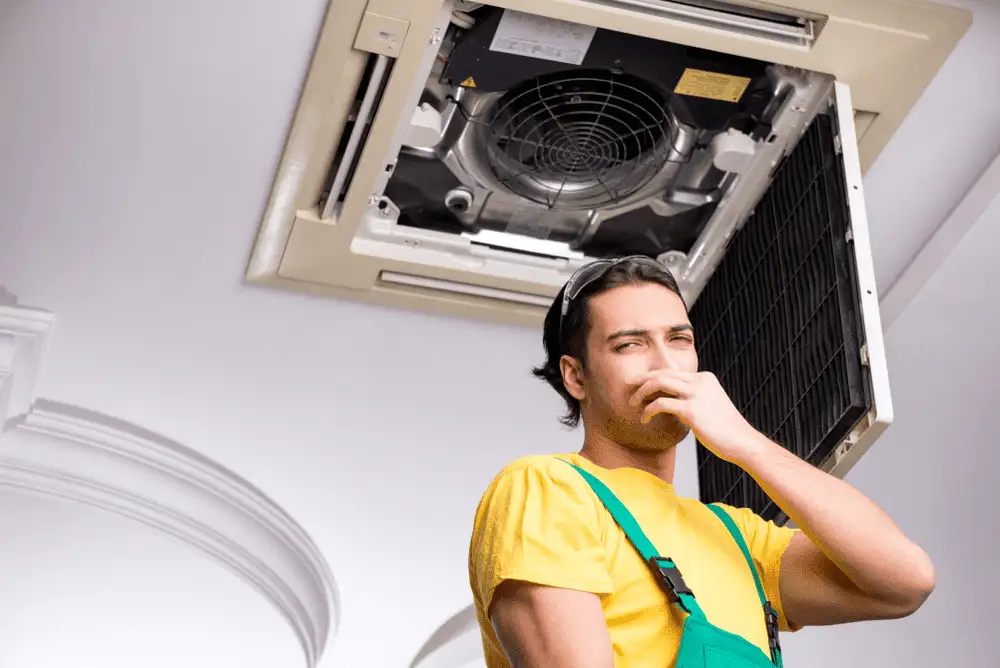
    Despite Arizona’s generally dry conditions, you may notice a musty smell, especially the first time you turn on the air conditioning for the season. A Phoenix HVAC service can diagnose the units you have and identify if that is the source of the odor. However, that is not the only reason desert homes may have a stale or dank scent. Whether your home is newly built or has stood for decades, here are a few tips to help determine where the smell is coming from and how to get rid of it.


    Identify the Source

    Put your nose to work and sniff around the house. Is the smell in one room such as a bedroom or family room? Check under and behind furniture, as well as in closets. Smell the carpet or flooring and walls. It is possible that a damp towel or washcloth got missed and it has developed mold. Removing the source can reduce the odor.

    If the foul smell comes from the kitchen or a bathroom, sniff the drains. P-traps are the U-shaped pipes under the sink. Over time, they may become clogged with soap scum, hair, toothpaste, and other common debris. Clean the P-trap or use a drain cleaner to remove the build-up. Seldom-used drains may have a bad scent. If you are a snowbird, have someone turn on the water once or twice a month to prevent septic or sewer gases from entering the house.

    Does the smell permeate several rooms? Are the room vents the source of the odor? A Phoenix home cooling company can remove the dust and contaminants, improving the smell as well as the air quality in your home.


    Increase Ventilation

    Once you identify and address the source of the odor, open the windows to clear out the contaminated air. Opening cabinets, closets, and cupboards can help thoroughly air out the house. Sometimes lack of ventilation and dust build-up can cause a stale aroma. Letting in the fresh air can reduce or eliminate the issue. Turn on the central ventilation or bring in fans to get the air moving.


    Fix Moisture Issues

    If there is a leak or other moisture problem in your HVAC, the musty odor will hang around if it isn’t addressed. Mold can grow in pipes, attics, at the corner of windows, and places that have flooded. Depending on the issue, you may need to hire a professional to handle the project. Once fixed, deep clean the area by using products such as white vinegar and water, baking soda, or commercial cleaning agents. Make sure you use gloves, wear a mask, and ventilate the area to reduce the risk of health issues that could be aggravated by exposure to mildew, mold, and chemicals.


    Clean Thoroughly

    Sweep the floors and mop with a cleaner made for that particular surface and material. Use a feather duster or damp cloth on ceiling fans, hard surfaces, and to wipe down walls. Vacuum upholstery to get rid of the dust on all household surfaces.


    Use Natural Air Fresheners

    Boil lemon peels in a pan of water until a lemony fragrance fills the air. Remove the pan from heat and place it in the room you want to air out or wait until the water cools, fill a spray bottle, and spritz around the room. Fans can help increase ventilation. For small areas, such as cupboards or closets, set out a plate of baking soda for up to 24 hours. It can absorb unpleasant odors and moisture.


    New Home A/C in Phoenix

    If your air conditioner doesn’t work as well as it used to or an odor is coming from your vents, the professionals at Howard Air & Plumbing can help. We install new units and offer a full line of repair and maintenance services that can help your current system last longer. Contact us today at Howard Air & Plumbing in Phoenix to schedule an appointment with our NATE certified technicians.

  • Amazing HVAC Industry Trends

    Amazing HVAC Industry Trends

    Whether you’ve been watching a lot of HGTV or you’ve just been told your HVAC needs to be replaced, the HVAC industry has been undergoing a huge transformation. Thanks to the skyrocketing trajectory of technological advances, HVAC systems are becoming more efficient and advanced. If it’s about time to contact a Phoenix HVAC service, here are some of the latest trends and innovations in HVAC technology that you should consider for your home update.


    Go Ductless

    If you have a tiny space that you’re looking to heat or cool, or you are adding a room to your house, a ductless HVAC system could be a good solution for your home or office. These units are also perfect for houses that have rooms with different heating and cooling needs. Ductless units are smaller and can be placed throughout a home. Ductless HVAC systems are also ideal for spaces where you need to keep dust out. Regular ducted HVAC systems have a tendency to accumulate dust which can easily be spread throughout a space. If you are interested in going the ductless route, it’s important to work with a Phoenix A/C repair service to ensure proper installation.


    Create Zones

    Similar to installing ductless units that can allow different temperature variations, one of the hottest trends in HVAC is creating different zones in your home or office. When you have a large space, a single HVAC unit may not be enough. By adding another unit to your home, it is possible to have different temperatures and airflow in different regions of your house. This can be done using either a ducted or ductless unit. If you’re searching for new A/C systems in Phoenix, check out some options offered by Howard Air & Plumbing.


    Opt for Smart Thermostats

    If you rely on Alexa or Siri, this trend is a no brainer. Smart thermostats are an innovative trend that allows you to connect your thermostat to Wi-Fi. This, in turn, can be hooked up to any smart devices you may be running in your home such as Nest. Imagine being able to control the heating and cooling of your home from your smartphone. Your greater Phoenix area A/C repair service can help you install and program your smart thermostat to ensure ease of use.


    Use Geothermal Energy

    As the name implies, geothermal energy is energy that comes from under your home. It’s a cleaner source of energy that can heat and cool your home while saving you money and protecting the environment. Geothermal heat pumps are a long-term solution to your heating needs. They are also low maintenance. Environmentally friendly HVAC systems are a burgeoning trend that will only pick up as more people look for ways to cut down on their carbon footprint.


    Get More Energy Efficiency

    Over the last 20 years, it has become standard practice to ensure that new HVAC systems are Energy Star certified. This certification is a government recognized seal that means the HVAC unit is running at optimal energy efficiency which both helps you cut down on costs associated with heating and cooling as well as ensures that less harmful pollutants are generated by your system. If your current HVAC unit is not Energy Star certified, contact your Phoenix A/C repair service to find out about new options.


    Contact Howard Air & Plumbing

    If it’s been a while since your last HVAC upgrade or you’re interested in trying some of these amazing new trends in heating and cooling, contact Howard Air & Plumbing. We are the leading Phoenix HVAC service with more than 40 years’ experience in the maintenance and installation of HVAC systems. We provide emergency HVAC service 24 hours a day. Contact us today to discuss your needs or to schedule an appointment.

  • Phoenix HVAC Maintenance

    Phoenix HVAC Maintenance

    At Howard Air & Plumbing, we are proud to offer a full line of maintenance services that can add years of life to your heating and cooling system. With the help of our HVAC maintenance, your system will run with greater efficiency in addition to lasting longer. This increased efficiency will keep your home more comfortable and help you reduce the cost of your utility bills.

    Same-Day Maintenance Services for HVAC Systems in Phoenix, AZ

    Our customers don’t have to wait long to get the maintenance they need. In some cases, we can even offer same-day service. This fast response helps you rest assured that help is on the way, and we’ll get your heating and cooling systems back up and running as quickly as possible.

    Not only is our service fast, but it’s also extremely effective. All of our technicians are NATE certified, which is the highest rating in our industry. Thanks to our excellent staff, you can count on quality maintenance that will hold up for the long haul to keep you and your family comfortable.

    CONTACT US TODAY

    Preventative HVAC Maintenance Goes a Long Way in Arizona

    Arizona is known for its scorching summers, and the winters can get surprisingly cold as well. No matter what the weather is like, you’ll want to be prepared by making sure your HVAC system is as well-maintained as possible. Our skilled technicians will perform a thorough evaluation of your system, fix any problems, and do everything they can to prevent future issues.

    We’ll make sure everything is in working order, and that it’s clean, too. Your heating and cooling systems run through your whole house, so this is a great place to start the battle against dust, allergens, and bacteria. Part of our maintenance process is focused on helping you and your family breath easier.

    Reliable HVAC Technicians You Can Trust

    We’ve been performing HVAC maintenance for over 40 years, relying on the most innovative technology and expert technicians at every step along the way. As a family run company, we stake our reputation on our business and do everything in our power to make clean, comfortable air accessible to everyone. Learn more about our maintenance services and schedule your appointment with us today.

    CONTACT US TODAY